Between 2022 and 2026 we rebuilt our content engine four times. What each version cost us, what it bought, and what the fourth one does on its own. By Labani Biswas.
Human civilization built institutions, processes, even the idea of value, under the assumption that intelligence is a scarce resource. But now it’s available on tap. This drastic reality has been in the making for decades but only started teasing us about 4 years back — even then, the obvious was easy to deny.
GPT-3.5 was magical, yet it was stupid enough to elicit either of the following reactions:
AI will always be a plaything. It will fail to seriously disrupt the physics of our work, or drive any true outcomes.
Or more commonly — oh this is great, we can do things a lot faster, cheaper, but perhaps never better.
But for us at Atlan, Moore’s Law had already dictated too much of our lives to bet against it. We knew that in a few turns of the model, things would get real. Knowledge consumption and even creation were changing beyond recognition.
We spent a lot of time thinking and tinkering about what that meant for our distribution channels — organic search was by far the most predominant, efficient and scalable channel we had, and increasingly, the most disrupted. We also asked questions about the unit of value in our content, and how we could keep using it as a lever to reach, influence, and serve our community.
What helped us not be paralyzed in the face of such uncertainty is one enduring mission: helping humans of data (and now agents) do their lives’ best work. Between 2022 and 2026, we fundamentally reimagined our content engine at least 4 times in response to the demands of the business and the overall upheaval in the world.
This is an account of that evolution, but it’s also about us, our assumptions, our unconscious biases and the mythical power of saying “Why the hell not?”
The only lever to organic distribution is value to the reader.
Call it content, growth, marketing — if that’s your job, it is unfailingly simple. Find out what people care about, help them understand it, form an opinion about it, empower them with perspective or even courage towards their goals.
We like to keep ourselves busy hyperobsessing about 200+ ranking signals in the Google algorithm or imperceptible changes to Twitter/LinkedIn feeds, and these days, concepts like query fan-out/chunking for LLM search — essentially whatever promises to be a silver bullet to getting in front of the audience. But if you really think about it, all of these platforms are naturally geared towards engaging the reader with what they care about and will benefit from — and that’s the guiding principle behind how we built our content function.
Our audience, customers (and users) are looking to understand things, clarify their thinking, even learn how to use our product and connect it to their current systems at work. We must reach them where they are asking these questions and serve intellectually honest answers, unique perspectives and helpful examples.
Our unrelenting curiosity about this is perhaps one of the most consequential bets that we’ve made as a marketing function (even company).
The mission is also what’s endured as the world changed on its head. The biggest change was in how our audience sought information — they were moving on from Google and its 10 blue links, to a handful of chat interfaces (ChatGPT, Claude, Gemini, Perplexity, and others) that gave them answers, not a bridge to answers.
We test whether the answer engines cite us when a reader asks how to make AI understand their data. Those results feed back into what Helix plans next.
V1: Quality control of thought, not words.
One of the first insights that we had in the process of setting up a content engine that is predictably trusted and rewarded by humans and algorithms alike is this: understanding the why, or the intent, of a content piece is the limiting factor to success. Everything else is downstream of that identification and conviction.
The V1 of our content engine was one person, collaborating with a bunch of external partners (including agencies and consultants). The process had a strict check on what we called the outline phase. We would not start writing a single word until we aligned on what we needed to write, the flow of information and the value in a piece.
Placing a strict check at the outline stage itself often stalled our publishing process, and we often struggled to keep up with our content calendar, where multiple pieces wouldn’t move past even the outline stage. But we realized it was necessary to achieve our goal. Getting some traffic on the website was not the goal — getting the right people to trust you and see value in our content was.
This was Q1 2022, and we did not realize then that we were setting ourselves up for a competitive advantage in a world where words would be in unlimited supply, but insight, perspective and understanding would still be constrained. On December 1st that same year, Sam Altman tweeted, announcing ChatGPT.
AI-assisted → AI-augmented → AI-native.
V2: AI-assisted
Coming back to GPT 3.5 and the earlier generation of LLMs, in April 2023 we built our content engine V2 with the help of GPT 4o.
But that did not happen naturally. We wanted to believe GPT was generating gibberish, and that we’d never be able to prompt it toward value. Yet the writing was on the wall — and the results undeniable.
We set up a parallel pipeline based on the same principles. We controlled what needed to be written and defined the value in a piece of content. Someone (in this case, GPT 4o) wrote the words in service to that. At that point, hallucination was still a big problem — so this pipeline evolved our external partners from writers to editors to help polish the value out of these pieces.
This single step-change helped us triple our highest-ever production volume at one-fifth the initial cost, gave Atlan its first hockey-stick graph in qualified traffic, and fed our business pipeline with ICP personas for at least 6 quarters after.
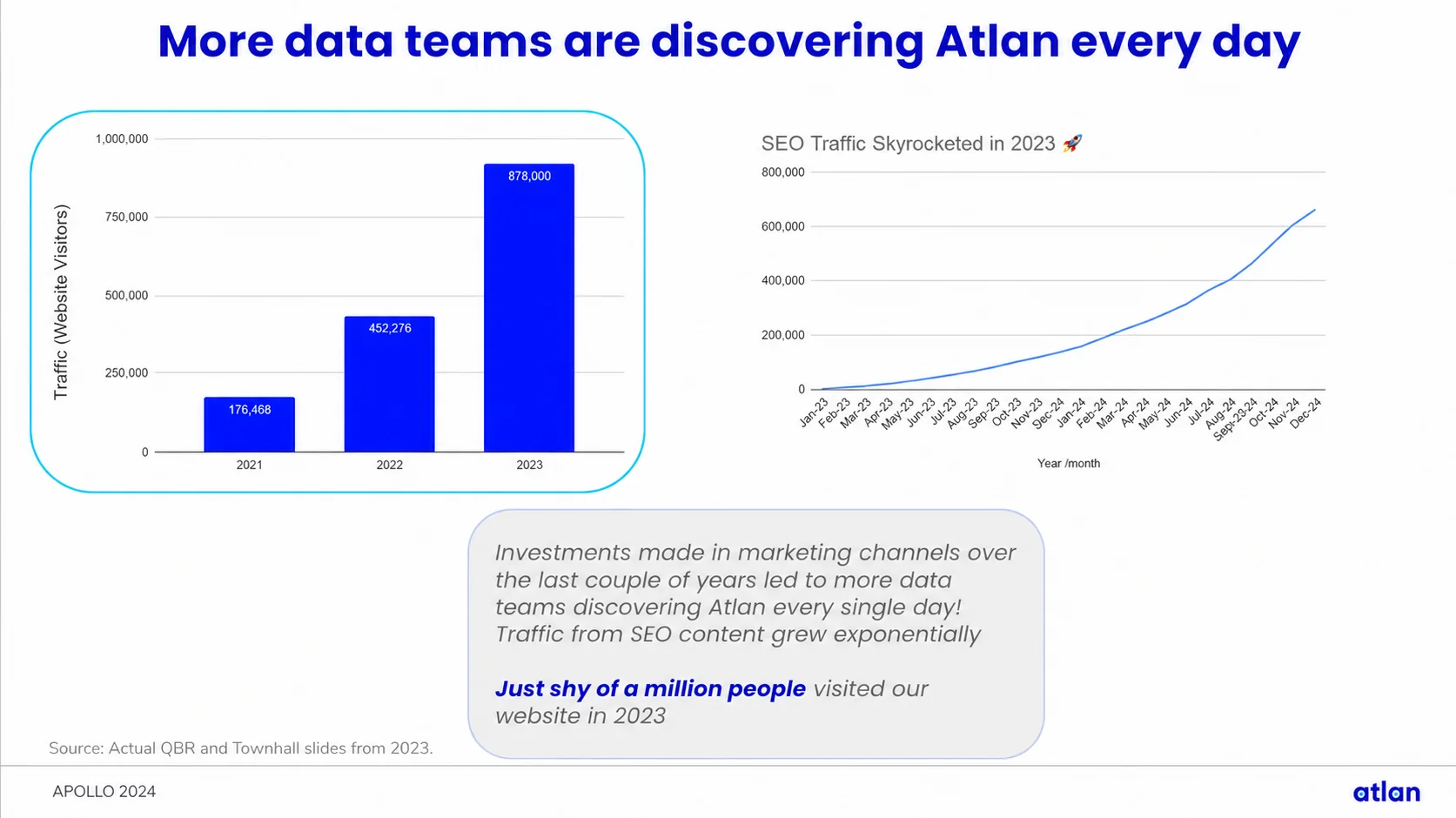
That content still stands the test of time, even after several helpful content updates from Google.
V3: AI-augmented
The AI-assisted process worked (and honestly will still work) — but it was still bottlenecked by a human’s or several humans’ ability to package context. The definition of value in a piece lies at the intersection of understanding of market, customers and product. The above process still required a human to hand-stitch that understanding and hand it over to an LLM and other humans. But by Q2 2025, there were better tools for storing and calling on this context.
We shifted to using Claude Projects. The custom instruction emulated how we function: it had strict dos and don’ts, everything we knew about how to rank well on Search and with enough space for creative reroutes. The project files included everything that the human would typically read before defining the outline of a piece. It also had the ability to make a search tool call to our company knowledge base (Glean) that integrated all information sources in the organization.
V3 felt like going from a bullock cart to a rocket.
What used to take multiple prompts, back and forth with the chat window, became a single prompt: generate an outline for topic x. This immensely freed up humans to now feed 10-15X the number of external partners at the same time. Words were in free supply — we liberated ourselves from the constraint of looking for people who are both technical and can write well. We could just have subject matter experts do what they do best: pack their insights and lived experiences into pieces of content for value. The system took care of editing and optimizing for visibility and distribution.
V4: AI-native
Something shifted between November and December 2025. Everyone came back from the holidays restless. The best engineers in the world were having a full-blown existential crisis on Twitter. Coding agents had become mainstream. More importantly, grounding LLMs in relevant context rushed several generations ahead. Context and data could be shared with LLMs through various protocols and packages like MCPs, skills, and more. In parallel, the world of marketers was severely disrupted. The economics of digital marketing no longer worked.
We set up a Marketing OS to take advantage of these leaps in technology. Marketing OS is explained extensively here, but, simply put, it is a context repo where our strategy and knowledge are versioned, and our expertise is encoded as skills our agents run on, so anything we build starts out already knowing what we know.
In March 2026, we organized our marketing function around Marketing OS, and our content engine (V4) in the form of Helix followed soon after.
This is where our conviction met its ultimate moment.
What is the value of content in a world where intelligence is available on tap? Well, the value still resides in two components: 1) being able to present credible and helpful information, ideally with an original PoV or unique insight, and 2) most importantly, being the answer when and where your reader is looking for that information.
We rebuilt our entire content engine from the ground up around that conviction — the content engine should help us leverage our unique understanding of why a topic matters to the reader, all our collective knowledge as a company on that topic, and all existing credible literature in the world. Most importantly, it should also help us progressively crack distribution of our content via LLMs — the next frontier.
Helix is the name for the process of making ourselves redundant.
Helix exists both as a group of skills and also as the executor of those skills — an agent. Helix is not built to assist our content engine, or to augment it. It is built to become it and become us.
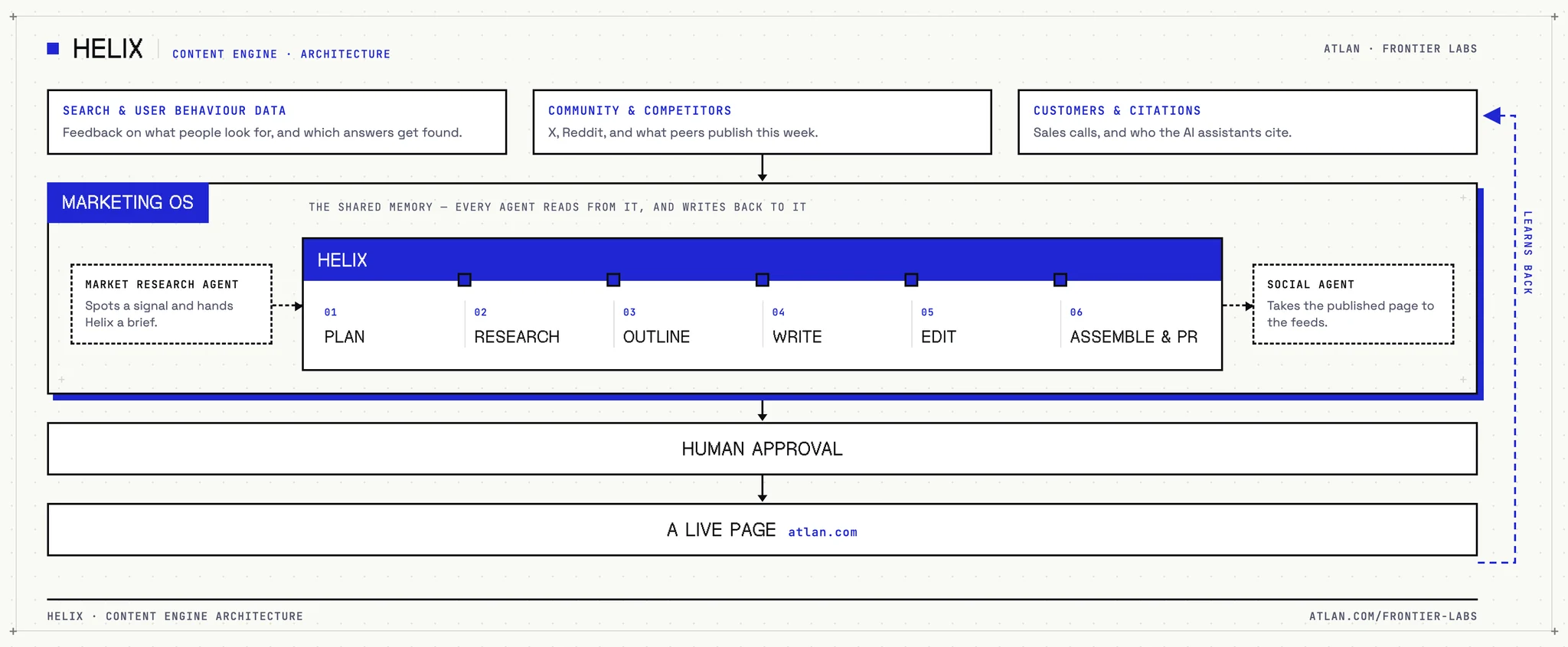
We started by giving it the ability to power through publishing any cohort of pages through six phases — plan, research, outline, write, edit, assemble. It also runs the other things we have taught it since: competitor comparison, coverage of an event while the event is still on, a brief for an external writer.
Every few days, it picks up another skill. It also keeps its own schedule — tell it to do something every Monday at 9:00 and it writes that into its calendar itself. The power of Helix is in its ability to leverage all our collective knowledge (structured and unstructured data), procedural expertise and norms via Marketing OS.
It can at will tap into demand signals flowing in from GA4 or Google Search Console. It keeps abreast of the buzz on Twitter and Reddit. It has insight from results of experiments that we’re running on increasing citation on LLM surfaces. It also learns from conversations we are having with customers and forms a log of the things they care about.
Helix now holds knowledge and context that none of us can individually hold, and can only hope to conjure. More importantly, Helix learns continuously and faster than any of us.
Also, the cherry on top, Helix is able to hand over specific parts of the content engine to models best suited for the job.
Planning is Claude reasoning across everything we know to build the topic tree, while Gemini goes and checks what already ranks. Research runs three models at once — Gemini on the search results, Perplexity through the sources, Grok on what practitioners are actually complaining about. Claude writes the draft. Then Grok attacks it, hunting for claims nothing supports, and Claude revises. Editing is four passes: voice first, then every factual claim checked against live sources, then a plain HTTP request to confirm each link resolves, then one more pass to fold in what the first three found.
In essence, Helix is able to figure out what our readers care about, gather relevant and credible information around it, generate a unique PoV from our reality and experiences, and even write the code that finally makes a piece of content into a live URL on the website.
Evolution isn’t trying to get somewhere, it is trying to make the best version of ourselves.
So what’s left for us? Are our jobs essentially done? Well, in a way, yes. But that’s the part to realize — in the current world, we couldn’t possibly keep doing what we were doing 3 years back or even 6 months back.
The risks that need our attention are far more existential, our opportunities that peak from the horizon are generational. Helix is doing our job so we can move to what’s next.
Helix makes most of our past constraints around quality and quantity of content obsolete.
See an opportunity not initially part of the content calendar? It will not take days to go to market — it will be hours.
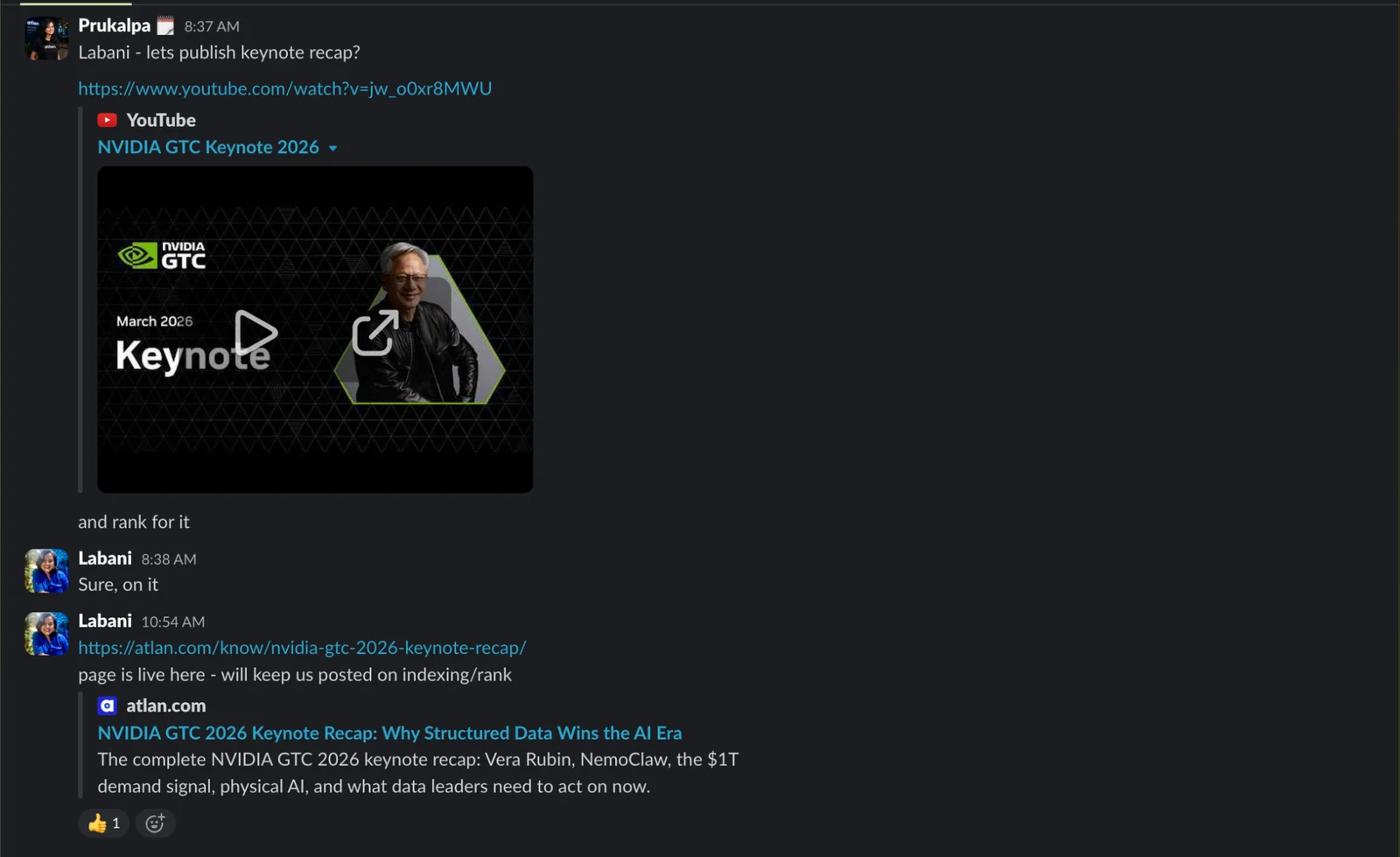
Want to test demand across competing theories of how your market is defining the problem? You don’t have to wait a few quarters to publish along the breadth. You can do it all at once in a sprint.
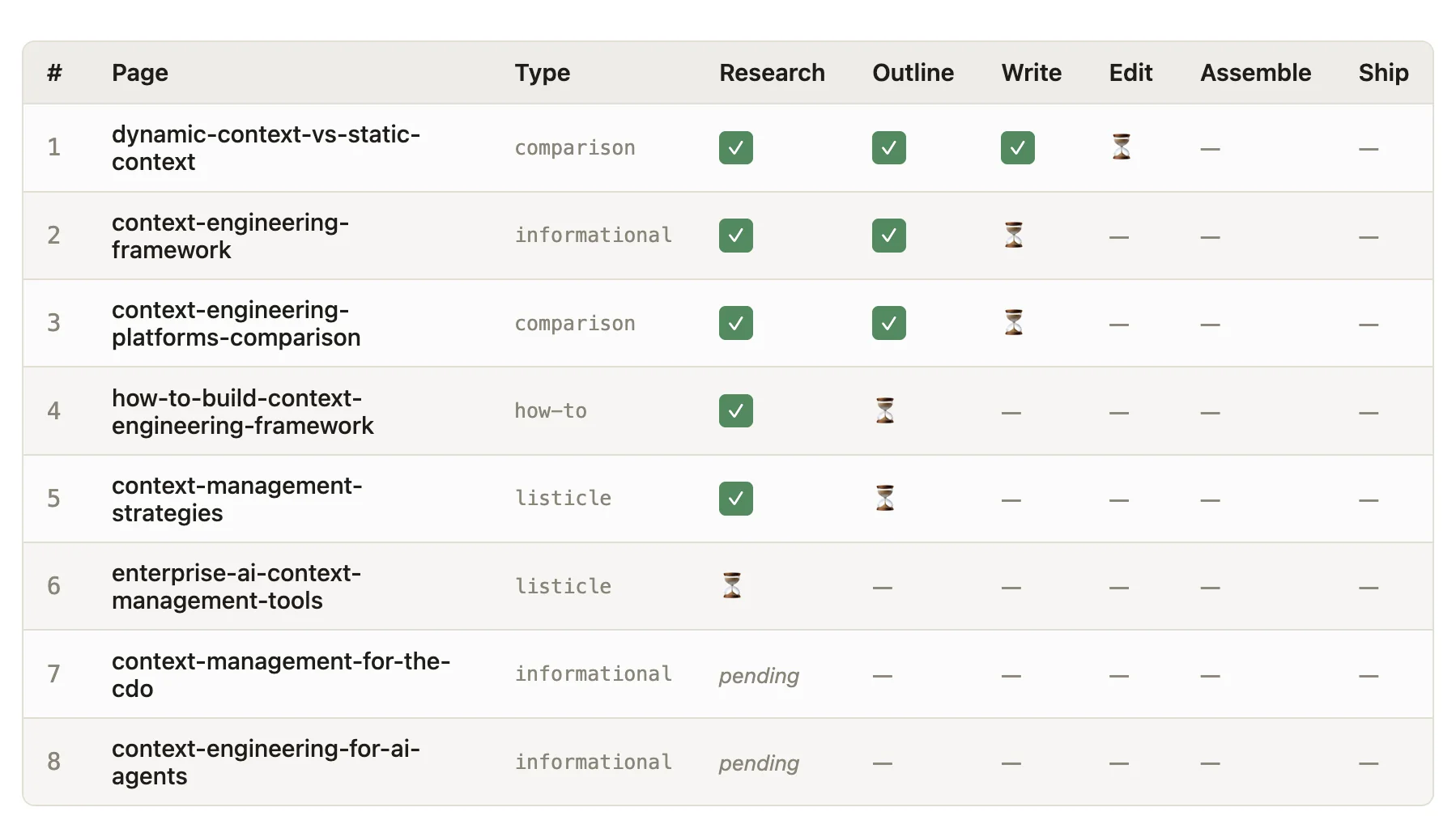
Want to run a newsroom-like experience for live events that your community flocks to? That’s possible too — connect Helix to the right sources and the right people.
In our case, the biggest value so far is not that we now spend a third of our initially approved budget for content, or that we can spend the time going academic on topics with the best subject matter experts on them, or even that we’ve cut the time to market when we identify an opportunity.
It’s in the option to choose to work on the most impossible problems and exciting opportunities that otherwise get sidelined by the need to keep the lights on.
This is an account of how we had to evolve our content engine to meet the demands of our growing business and the changing tides in the world. But in the process, we also had to evolve into different animals that could devise and maintain each version of it — and also imagine what’s next.