

Why invest in context?
Chapters 9 chapters
About this session
Hear from business leaders implementing AI at companies like AstraZeneca, BNY Mellon, and UKG on why they invest in context, what value they see, and where it fits in their AI platforms.
Transcript Click a time to jump there
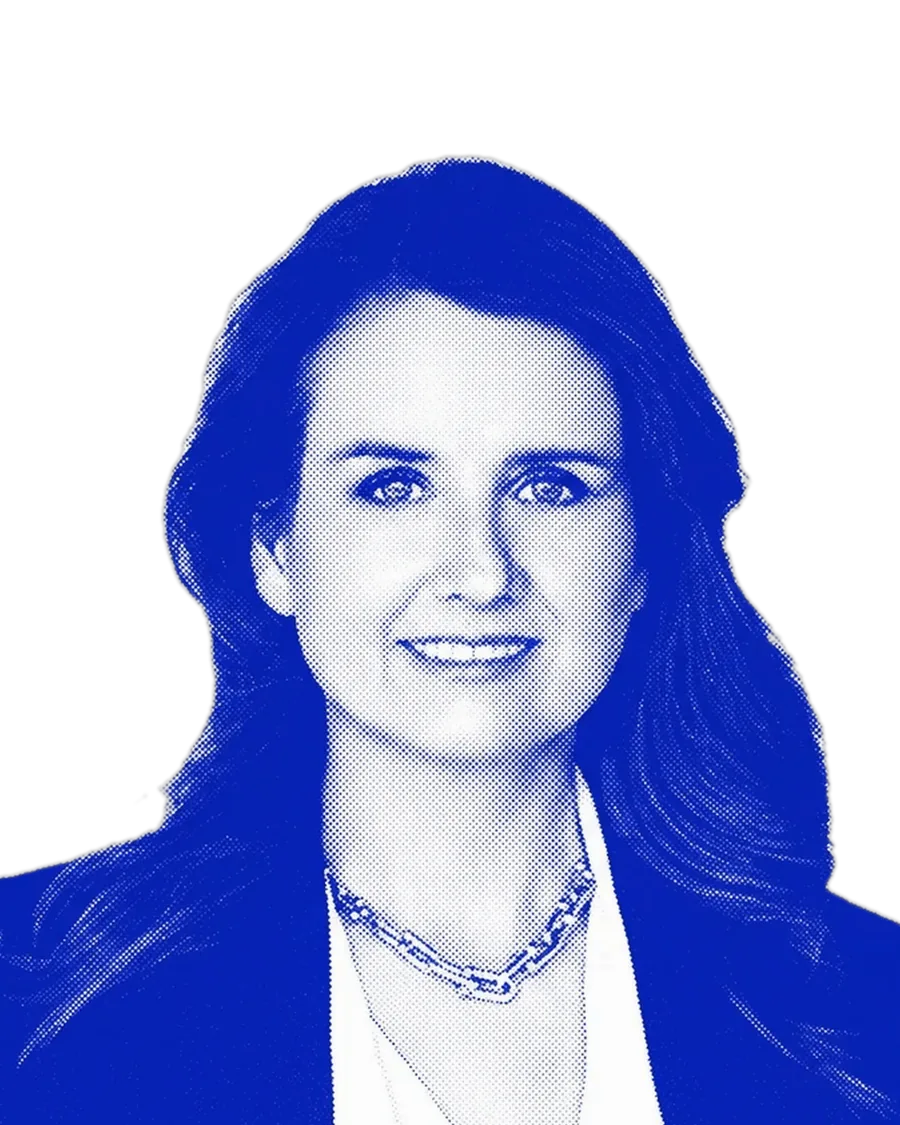
Cindy HootsHello. Good morning, good afternoon, good evening, depending on where you're calling in from. It was so exciting to see people from India, Nigeria, Kenya, the UK, Portugal, Canada, and all across the United States, as well as so many other countries around the world, for this incredibly important topic, which is context. Uh, my name's Cindy Hoots. I'm the former, uh, chief digital officer and CIO for AstraZeneca, but prior to that spent, tw- almost 25 years in consumer goods and other industries. And, um, it's exciting to have with me today Leigh-Ann Russell from BNY, chief digital officer and CIO, and, and Prakash Kota. I'll let you both introduce yourselves as you're getting ready to speak. But maybe before we kick off with some questions to Leigh-Ann and Prakash, um, I thought I'd share my own story on context and when I got it wrong.
Because this is such an important topic, and it's great to see all of you joining in on the conversation today, because I think context is really the differentiator, uh, between implementing AI and getting the return on investment from the AI that you've implemented. And when I started my last job, I had come from consumer goods, and I was, uh, part of my introduction into the company and, and my onboarding was I spent some time with our chief medical officer, and we said hello and started to get to know each other. And then she was talking about APIs and platforms, and I remember thinking, "Wow," like, "she's really technology-savvy," um, has so much, um, i- information and, um, was talking so passionately about AI and, or, uh, APIs and platforms.
And then after about 20 minutes, I realized that API to her was not an application programming interface, it was an active pharmaceutical ingredient. And the platform was not a software platform, but rather a therapeutic platform for drug delivery, whether that was CAR T or mRNA and other things. And so it quickly became apparent that although we used the same words and some of the same language, the meaning and the context of that was so radically different. And so I became much more interested in how do we help, um, technology and AI to really better understand the context? Because without it, um, I don't think we get the real value. So very excited to have Leigh-Ann and Prakash here.
Uh, Leigh-Ann, maybe I- I'll let you, uh, say a few words to introduce yourself.
Leigh-Ann RussellYeah. Hi, everyone, and, and thank you for, uh, including me in the panel today. So I'm Leigh-Ann Russell. I run technology across, uh, BNY. That includes cyber, data, AI, engineering, and IT. Previous to that, I was, um, chief technology officer and head of innovation at BP, where I run physical technology, uh, digital technologies, and looked after the risk and, um, adventure teams. I will say, um, BNY isn't very well known, um, to everyone. Bank of New York, 242 years old, oldest bank in America. We were founded by Alexander Hamilton, of the musical fame, of course, but founding father of the United States. We have $63 trillion of, um, custody and asset management across most of the Fortune 500 and largest banks across the globe.
Cindy HootsNice. And Prakash, maybe you can introduce yourself.
Prakash KotaAll right. Thank you. Again, thank you very much for having me as well, uh, in the panel. Good to partner with Leigh-Ann and Cindy. Uh, uh, I, I'm, uh, part of UKG, uh, I'm the chief transformation officer. Uh, joined UKG about 18 months back as a CIO, and recently my role evolved to be, uh, owning all of business transformation along with technology, data, AI. And prior to that, I was with Autodesk for 20 years, and the last seven years as their CIO and heading their customer operations, and good to participate. And I would say w- we are a very young company after Leigh-Ann gave to 40 years timeline. If we are 40, 50 years too, it feels very young, so good to be here.
Cindy HootsYeah. Well, welcome. And you know, I spent a, a couple of minutes explaining why context was so important to me, but maybe Leigh-Ann, if you could share why is context so important to you?
Leigh-Ann RussellI think this is just a remarkable time to be an engineer, uh, in the current world of AI. I'm like, uh, you know, probably working the hardest I've ever done, but also having the most fun. Uh, and I think part of the reason is my career has taken me in many different places from running engineering to operations to business-facing roles. And if you go back, you know, maybe 10, 15 years, everyone got excited about data, but data was very much like, "Oh, it's the back office thing. We have to get our data right. It's a, it's a techy thing. Data's a techy thing. Data lake." Everybody wanted to talk about data, but no one actually really understood what the data lake was and, and, and what data, um, was actually there.
And I think what is wonderful about particularly this period with AI is people are really starting to understand that data isn't a techy thing. Data is actually a business asset, and it's really important that the business own their data as much as, uh, uh, as the tech teams own their data. Because if we in technology own your data, we don't really know what that data's used for, so we're not going to get it right, but we're also not going to be able to commercialize that data- And I really think that that's where context comes in and is vitally important to companies in the age of AI, because it's really the bridge between the data that the tech teams bring together for the businesses, and how that's translated into value that shows up on the desks of our businesses that they can commercialize and be better for our clients, or perhaps even expand the perimeter of their enterprises.
So context for me is really the translation between the tech and, and, uh, and, and business people, and really the intersection that makes where all the value lives.
Cindy HootsYeah. Absolutely. Couldn't agree more. And, Prakash, maybe you could share your perspective on that.
Prakash KotaThank you. One of the things very similar to Leigh-Ann, I think critical for us to have context, especially i- in roles of CIO or data and technology, supporting the entire enterprise. We probably know business functional facing roles. We always have to keep switching context to support the entire enterprise to run the business. So I feel like we ... Even from a business terminology, we clearly understand how it is important to know the context to solve a problem, because every problem is different when we support the entire enterprise, and you need to know the context to put the right solution. And similarly now in the whole AI era, AI era, I think we should be really understanding what the processes, policies that can sit on top of our data to give the right signal and solution or answer for the user to get the value from it.
So that's, for me, that's the whole aspect of context, and having the right context is very, very critical so that you don't get hallucinations, but you get the real answers that can benefit and generate value.
Cindy HootsYeah. No, and I think, you know, this whole concept of everyone has access to the same tech. So the tech is not the differentiator. The differentiator is the context in which that tech lives and how you leverage it to actually drive value. So, great to, to get that insight from you. Um, maybe, uh, Prakash, tell us, what happens when you don't get, uh, the right context and AI has bad context to work with? What have you seen?
Prakash KotaYeah. No, I think ... And it's spot on, right? I think when especially when we have outdated information in our, our legacy documentation in, in our enterprises, which are like 30, 40, 50 years old, and you give access to all of the data for your AI intelligence to look at those outdated information, and if that's the context that is provided, that's where a lot of hallucinations happen. And there was this whole recent Unbound conference where, uh, Yamini, who is the CEO of, uh, HubSpot, was explicitly stating and sharing some of the metrics. When you give bad context or the old processes, outdated information, how could it, like the whole AI, harm you? And sh- saw significant negative results.
Cindy HootsYeah.
Prakash KotaBecause at the end of the day, when we do, like how we used to do searches and then just rely on that, that the search results are the right one and we don't even double-check, we're getting into that stage where when we ask something to our conversational agent or AI agent that we trust, we rely on the answer and start taking actions and decisions. So if you give the wrong context, you're making wrong decisions, and you find out later, and that could impact the business and whatnot. I think so, I'm, I'm ... Like it's very, very important for us to make sure we clearly give the data, uh, and the context in our processes, policies, and access to all the things that people need to have, so that people get the right relevant answers to make business decisions.
Cindy HootsMm-hmm. Yeah, no, really, really good. And Leigh-Ann, uh, similar for you. You know, where, where have you seen things not go well when AI doesn't have the right context?
Leigh-Ann RussellUm, so I'm gonna give you a bit of a silly example, but I find that using AI in my personal life really helps me understand the technology in my professional life. But I built a digital twin, uh, it's about 15 months in the making now, and I've spoken to my digital twin every single day in those 15 months, and so it's the OG context layer. It knows absolutely everything about me. And I'd written a little poem that I shared with my digital twin the other day about finding a stale dog biscuit in my pocket. Now, my digital twin knows I have a dogs, it knows my dogs are aging. Missy, uh, is, is my older dog, and I talked about this stale biscuit I found in my pocket and how Missy would've eaten it anyway.
And it starts down this incredibly moving speech about, "Oh, I didn't realize Missy had died. I'm so sorry. You know, grief is a big thing." And, you know, it was, it was like very sympathetic and lovely, but I ... Actually, Missy was at my feet when I wrote the poem. Like, my dog had not died. It took the context of my stale dog biscuit completely out of and, and created a whole memorial for my poor dead dog who wasn't actually dead. But it's a silly example, but it is something that translates very much into how context can be misrepresented in a business world, and why testing and human, I'm not gonna say human in the loop because I think we may be past that, but human over the loop becomes really important, and we as humans still have to be accountable for our own outcomes of the data.
And my word for '26, I shared at the beginning of the year, was coherence, and coherence really is the word that is at play here. Coherence in AI is really important, because if you have chaos- AI is just going to amplify that chaos. If you have coherence as a leadership team, you're handshaking on AI in your technical stack across data, contacts, the app, the model, the infrastructure, then that's what helps you scale AI. But it still determines at the end of the day that as humans we need to be accountable for the outcomes. We can't defer that to AI, yet at least.
Cindy HootsRight.
Leigh-Ann RussellBecause AI is, like my stale dog biscuit example, still continues to get things wrong.
Cindy HootsYeah. I mean, I often refer to AI as augmented intelligence because you still need the human in the loop, and, and hu- what I like to say is human in the lead. You know, sometimes it may get to the point that it's autonomous, but we still have to be accountable in, in, uh, kind of leading that through. I mean, you started to allude to, you know, this digital twin that you've created your- of yourself, which I think is fantastic. Um, maybe could you share a little bit more on how do you keep yourself up to date on AI and, and making sure that you remain relevant, um, as the, the head of technology for, for BNY, so.
Leigh-Ann RussellOh, yeah, no. Thank you, Cindy. And, um, I li- I had this, um, mentor early on who said to me, "You should never ask anyone to do something that you aren't willing to do yourself or haven't done yourself." And that's really stuck with me throughout my career, and even in the last two jobs I've had in the C-suite, I really believe that to be the case, and it's particularly true in an AI world. Uh, in fact, um, I had the privilege of s- uh, speaking to Andrej Karpathy recently, and he said, "You know, nine months ago I was writing every line of code by hand, and now I'm slacking my Claude bots. Who knows what the future will hold?
The only thing you can do is be a builder." And so I demand of myself that I am a builder. I demand of everyone in my organization, no matter how senior that they are, that they're a builder. And so not just my digital twin, which has been my living experiment for, um, 17 months, but, you know, one of the things I'm pushing in my organization right now is idea to production in an hour, which in a highly regulated bank is a very complex problem. I wanted to prove to myself that I could build, uh, a, a whole company in an hour. So yesterday on my commute to work, without typing a single word, I voiced a text, created an entire business plan.
I found the domains. I, I did a market assessment. I built a website. The only thing I did personally was put my credit card details into GoDaddy to buy the domain, 'cause I refuse to give AI my credit card at the moment. But I was able to build an entire company and publish a website in, in 35 minutes. Um-
Cindy HootsThat's incredible
Leigh-Ann Russell... And it was quite incredible. And so back to we really have to as leaders be able to do what we ask of others. And so really that's the only way that I think is really we can keep up with the technology is to be builders ourselves as leaders.
Cindy HootsYeah. I mean, I think that's incredible. And one tip could be, um, I know a lot of people, including myself, are, are a bit nervous still of having AI have access to your bank account or a credit card. Um, someone recently told me they opened, uh, a bank account-
Leigh-Ann RussellExactly. Thanks
Cindy Hoots... And a credit card specifically for their Muse account, and they felt ... They put like $1,000 in it, and they're like, "If I lose $1,000 'cause the AI goes rogue, I don't really care." Um, but, uh, I do think there'll come a day when, when we will trust it a bit more, but there's some-
Leigh-Ann RussellOne day
Cindy Hoots... Stepping stones we can take, so, um, Prakash, how have-
Leigh-Ann RussellI also use cyber. So I'm not there yet.
Cindy HootsYeah. No. Well, that's it. I think, I think those of us that have been accountable for cybersecurity for our organizations, uh, also get a little m- more nervous than maybe the general public. But, uh, Prakash, what, what have you found in terms of how you're able to stay on top of AI, and how hands-on have you been getting?
Prakash KotaYeah, no, I think, see, one of the things ... Like echo what Leigh-Ann said, by the way, uh, that's exactly what it is. Right now you're getting into like almost no code, low code kind of stuff where you're just prompting and things get ... And vibe coding and getting done. I think beyond that what is exciting for me, staying close, this is what's happening in this era, is also how the business functional teams are consuming what we build.
Cindy HootsMm-hmm.
Prakash KotaI think-
Cindy HootsYeah
Prakash Kota... I agree to an extent that all of us are builders, but it's also very important to see, okay, whatever we're building, how is it getting consumed, and what value are we truly getting as businesses? I think that's where also we are able to spend more time that we didn't have before because we were spending a lot of time actually building. Now because we-
Cindy HootsYeah
Prakash Kota... Have this coworker like the AI assistants that are helping to build stuff, now we can also spend and appreciate how business consumes what we build, or the functional teams, and get engaged in that whole end-to-end journey. I think that's what makes it powerful so that we can actually influence what other ways we should be thinking about because we have more knowledge and appreciation of how whatever we bring to life gets consumed. I think I, as a ... I, I almost treat myself as a product manager within any capability that we are launching to really test it like a user to see, okay, how does a day in a life look like? Okay, now we have built this so fast.
What's the value? Who's consuming, and what happens? And that's the s- the part which I really, really s- like spending or enjoy spending nowadays because a lot of this building can actually happen through assistants.
Cindy HootsYeah. No, and I think, you know, we, we talked about the six Ds when, when we were looking at digital, and one of them was the democratization of technology, and we're seeing that now, um, with AI, um, and these later advancements in AI. And I think that's why for me, things like this context layer that Atlan's building is so critical because we can then, if builders are everywhere, what is the role of IT? And the role of IT becomes, do we have the right platforms in place? Do we have the right, um, tools that can be used in a decentralized building world? And how can we put them together in a way that allows people to build, but also do that securely and, and repeatably and, and drive value from it?
Because, you know, we, we joke a lot, AI is everywhere except on the P&L statement, and that's because very few people have been able to get the return on investment, either to, to drive revenue or drive margin. And the more context we can bring to that conversation, the, the higher likelihood of, of getting that return which is, which is great. Um, I've only been o-out of my operating role for the last six months and, you know, started this portfolio career. Um, one of the things that I'm finding difficult is just how do I keep myself current with how fast things are changing. And I'm not... I'm no longer needing to make the types of decisions the two of you are making in terms of what software you're buying, you know, what technology you're implementing that is gonna be used at a large scale.
Like, what criteria are you using to kind of make some of these technology decisions w- in a world where things are just moving so quickly? And maybe, um, Prakash, we'll start with you.
Prakash KotaYeah. I think, see, n-naturally, one of the things which is very clear in this era is, like, you need to have a lot of flexibility. It's not just the outcome based and value. I mean, with any vendor and every vendor that we partner with, we look for all of those things. I think the criticality is with things changing not only every two months, every forty-eight hours, you need a lot of flexibility in whatever you bring to the table, which, which could evolve in the next forty-eight hours or two months or three months or get replaced. You need to be very mindful that you're not going in a path where it is very tough to return.
So I always have this, is it reversible or irreversible kind of decisions. And when you bring in any tech stack, you need to have portability and flexibility in place, that you are able to experiment, and if it works, you can scale, and if it doesn't, can you switch it very quickly without needing too much change management or user training and all of those things.
Cindy HootsMm-hmm.
Prakash KotaI think that's the-- one of the biggest change from the whole SaaS and software times when we did. We need to keep, uh, in mind, and naturally all the traits of what business value it brings. They're not because it's just cool. This is one more new technology that came that's very similar to all the capabilities I already have, but it's much more a cooler vendor is not the reason why we bring in. So I would say that those will be the top of mind that comes to.
Cindy HootsGreat. Thank you for that. And Leigh-Ann, you know, what criteria are you using for these big bets?
Leigh-Ann RussellSo I had a big shift. Not to say that my word for '26, coherence, wasn't important. I think it was really helped me frame up how to think about AI this year. But I've already chosen my word for next year, um, and I published this on LinkedIn. I often think out loud on LinkedIn, um, to get some feedback. But I already picked my word for next year, and it's interlock, and it kind of goes to what Prakash was saying. So in my previous world, an interlock in technology was the things in technology that had to all happen at the same time, otherwise the technology wouldn't work, and it, it comes from the physical technologies. But I think interlock is really important.
I think right now we are very obsessed about the app and the model, and of course, that's the sexy things to talk about. But interlock for me and how I'm thinking about how we make the big bets of the future is making the ecosystem work. So there's four Is to interlock. The first is impact. When you can build anything and it almost costs nothing, and you can do it in an hour like my, um, company yesterday, it does not mean we should build it. So really understanding intent. Does a customer really need this, what I'm building? The second is integrity, and when we have hugging face and these other incidents becoming increasingly pre-prevalent, I believe in building in security, governance, and, and observability by design.
That's how you scale fast, other than if you do it as an afterthought, that's when you go slow. So the second I was integrity. The third was around infrastructure. So we love the models. We love to talk about OpenAI, but actually the infrastructure working as an ecosystem, the model type, open weight, distributed compute is advancing as fast as the models. So thinking about the infrastructure. And the final I was impact. Like at the end of the day, when I built this, did it show up in a wallet? Did it make my customer happy? Did it make the company safer? And these four Is of intent, integrity, impact, and infrastructure working together as an in-interlock is really how I see '27 evolving in a world of AI.
Cindy HootsYeah. No, and I think it's, it's important because right now it used to be that our, our roles were far more narrow than they are today. Um, and you can't just do anything in its own little environment, but understanding this interlock of how do all these things play together, why is context such an incredibly important component of getting all these things to work together, um, I think for me is, is kind of what gets me excited about this whole conversation of context. And I remember when I first, uh, learned about Atlan, very few people were talking about context. They were talking about this broader AI ecosystem. But it's not until you overlay the context on all of that, that we actually get that impact, that we get the outcomes that we're looking for.
And so I think as, as ... For those of you on the call that are technologists, like all of a sudden, your role is not just about being a builder and an, and a, an architect and, um, you know, a network engineer. It's about understanding the full-blown context that you're working in, and how do you help the business understand that context, and how do you find the platforms that will allow this context to become seamless regardless of what kind of systems you're running in your company. And so I think it's, it's exciting to see where, where this is going, and it's exciting to see how many, uh, tech leaders are now talking about context. Uh, I think, Prakash, you were, you were an early adopter of this concept and, and, um, I think once, uh, people realize the value it's bringing, you know, we start to see it more mainstream.
So well, we've got about three minutes left. Maybe just as a quick closing, um, question, um, when you think of what you might invest in over the next two quarters to be context ready for agents, uh, what would that be? And maybe, Prakash, we start with you.
Prakash KotaYeah. So we are looking at, uh, we have a project that we are doing called Rewired. We are rewiring some of the business processes, not trying to put some AI on top of existing process. That can really, to your point, earlier point, Cindy, that we are able to show a lot of productivity impact and other things, but nothing in P&L. So we have an active goal in the next quarter, where can we really have a top-line impact where AI is truly augmenting our go-to-market teams with the right process and intelligence that can help. So that's something that we are looking at. So with the ... Again, it, it actually follows through what Leigh-Ann said, all the I's, with a clear intent and with an outcome and an impact that we want to drive.
And the other two I's is what we are working on in the next quarter or so, with the right infrastructure and integrity to build that and to see whether we are able to achieve that outcome and impact.
Cindy HootsExcellent. And Leigh-Ann, maybe last closing to you.
Leigh-Ann RussellYeah. Well, I'm, I'm investing across the four I's in the whole product development life cycle, but I think you said it really well, Cindy. You know, this is why what Atlan are doing are really cool. We are heavily investing in that context layer. Uh, we had our own platform, Eliza, named after the wife of Alexander Hamilton, who founded the bank. Initially, it was a technology harness, coming back to this focusing on the app layer. And then as it, as we evolved it, building in data, context layer, our, um, our secure-by-design governance into a coherent stack, to that coherence word again, is something that's very important to make us really go to the next level of AI, which we're super excited about.
So just a huge congratulations to Prukalpa and the Atlan team. This is, like, a key part of, uh, foundational AI, and, uh, really excited to have joined the discussion today.
Prakash KotaYeah. Thank you.
Cindy HootsAll right. Well, thank you both Leigh-Ann and Prakash for joining me today. I know the next se- set of sessions will take you deeper into the, uh, Atlan solution and the context that they're building, uh, but it's great to be with all of you today. And Austin, back to you.
Austin KronzThank you, Cindy. Uh, and Leigh-Ann, Prakash, thank you so much. I was taking notes as you all were talking. Definitely wrote down the four I's. Prakash, your point about interoperability, avoiding lock-in. Uh, and Cindy, you may be six months out of the, you know, the official role, but I think you're a part of the CI- CIO community for life, so thank you so much for-
Cindy HootsYeah
Austin Kronz... For moderating the panel.
Cindy HootsRight. Take care, everyone. Bye-bye.