Use Case Guide: Impact Analysis
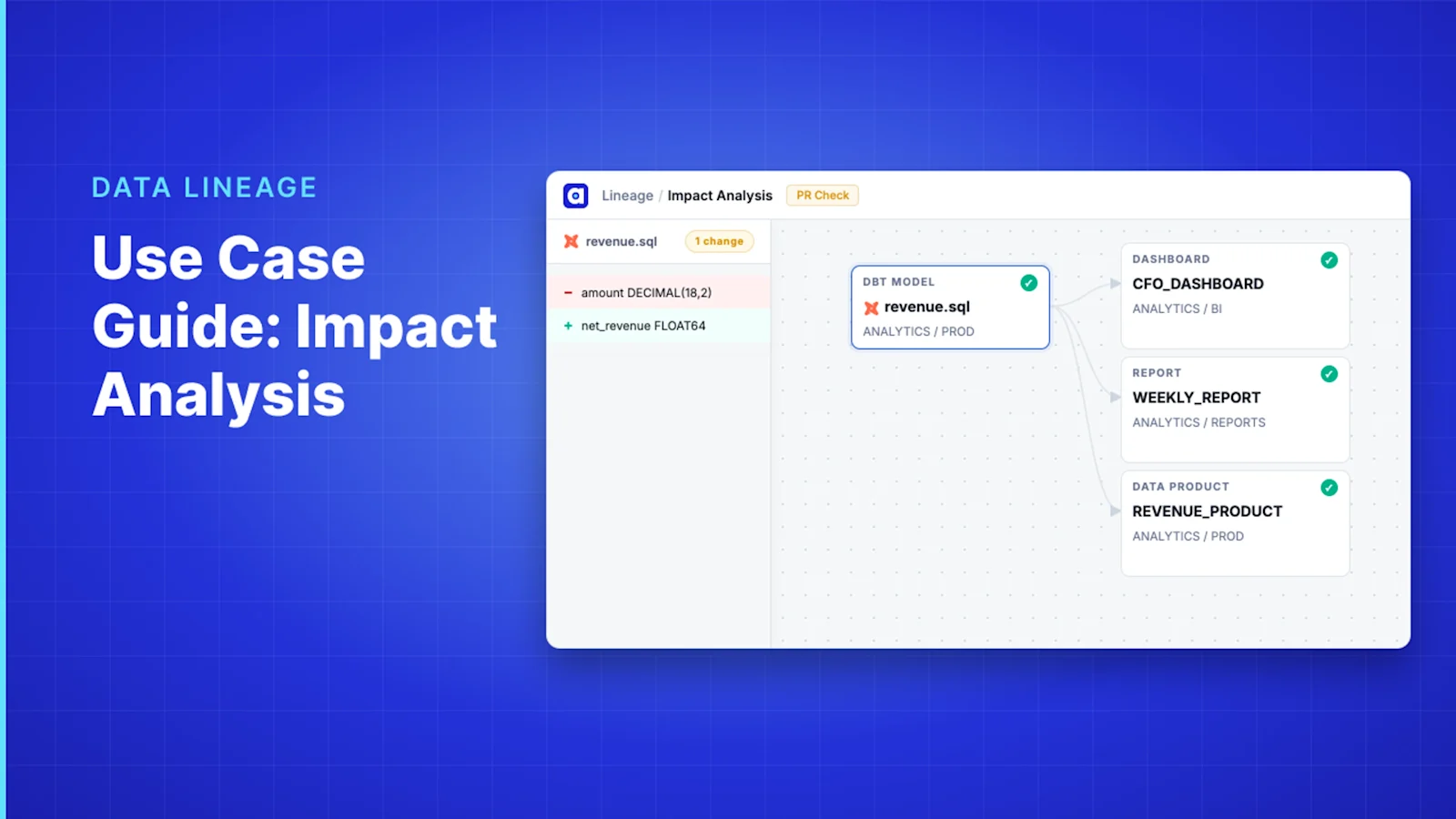
A guide to Atlan’s impact analysis—using lineage, ownership, and integrations to prevent breakages from upstream data and schema changes.
- Type
- Guide
- Length
- 7 slides
- Read time
- 4 min
-
-
-
-
-
-
-
-
End of the guide
That’s all 7 slides.
Keep a copy, or start again from the top.
Up next: Use Case Guide: Data Exploration
About this guide
This resource provides a detailed guide to impact analysis in Atlan, helping organizations prevent downstream data issues caused by schema or data changes. It highlights the common pain of breakages in dashboards and tables when upstream changes go untracked, which erodes trust, slows productivity, and creates frustration for data consumers.
The guide introduces two levels of solutions. At Level 1, Atlan’s end-to-end lineage is used to generate impact analysis reports that show all downstream assets—tables, dashboards, and more—affected by a change. These reports can be consumed directly in Atlan’s UI, downloaded, integrated into tools like Google Sheets and GitHub, or accessed programmatically via API, making impact visibility part of everyday workflows (page 4).
At Level 2, once impacted assets are identified, Atlan’s ownership metadata enables teams to quickly find and notify the right people. Collaboration is built in, allowing notifications through Slack or Microsoft Teams and ticket creation in Jira, ensuring that owners are informed and corrective action can be taken before consumers are affected (page 5).
The guide also shares adoption tips, such as embedding impact analysis reports directly into CI/CD workflows. For example, with GitHub integration, approvers can review downstream impacts during pull request approvals, preventing risky changes from being merged (page 6).
Finally, it outlines a framework for measuring business impact, including the number of breakages prevented, mean time to recovery, severity of breakages across tools, and change failure rate. These metrics provide a tangible way to demonstrate how Atlan reduces downtime, improves stability, and boosts confidence in data systems (page 7).
By combining lineage, ownership, and integrations, Atlan’s impact analysis equips teams to shift from reactive firefighting to proactive prevention—protecting trust in data while saving time and resources.