
The shared context workspace
for humans and agents.
Build a quality loop for AI context. Atlan Trident shows how your AI uses your context, catches what breaks when a model changes, and drafts the fix, so your AI gets better with every run.


Works in Claude Code, Codex, Cursor, ChatGPT, Claude, Gemini CLI, Slack, Teams, and any tool that supports MCP.




The self-improving loop for your agents, artifacts, and activity.
People and agents work from the same context. Every run leaves a trace that makes the next one better.

Actors
Humans and agents, working on the same context
- Data analyst
- Marketer
- Engineer
- Analytics agent
- Code review
- Renewals
Artifacts
Shared context that gets richer with use
- Skills
- Metrics
- Ontologies
- Tools
Activity
Every run teaches the next one
- Traces
- Outputs
- Behavior
- Feedback
Actors
Humans and agents, working on the same context
- Data analyst
- Marketer
- Engineer
- Analytics agent
- Code review
- Renewals
Activity
Every run teaches the next one
- Traces
- Outputs
- Behavior
- Feedback
Artifacts
Shared context that gets richer with use
- Skills
- Metrics
- Ontologies
- Tools
Make context compound across your company.
One registry for everything your AI runs on.
Give every person and every agent in your company one place to find the skills, agents, projects, metrics and ontologies they run on.
Manage context like code.
Trident brings software discipline to the context your AI runs on. Every change gets an author, a version, a release and a check, so nobody's agent runs on last quarter's guidelines.
Improve context based on how your company works.
Every turn in an AI tool and every agent run leaves a trace. Trident scores those traces, finds where context fell short, and drafts the fix, so your AI improves with use.
ROI max, don't token max.
Trace every token to the agent, skill and team that spent it, and to whether the run got the job done. Spend more on what pays off, and fix what doesn't.
Learn more about context.
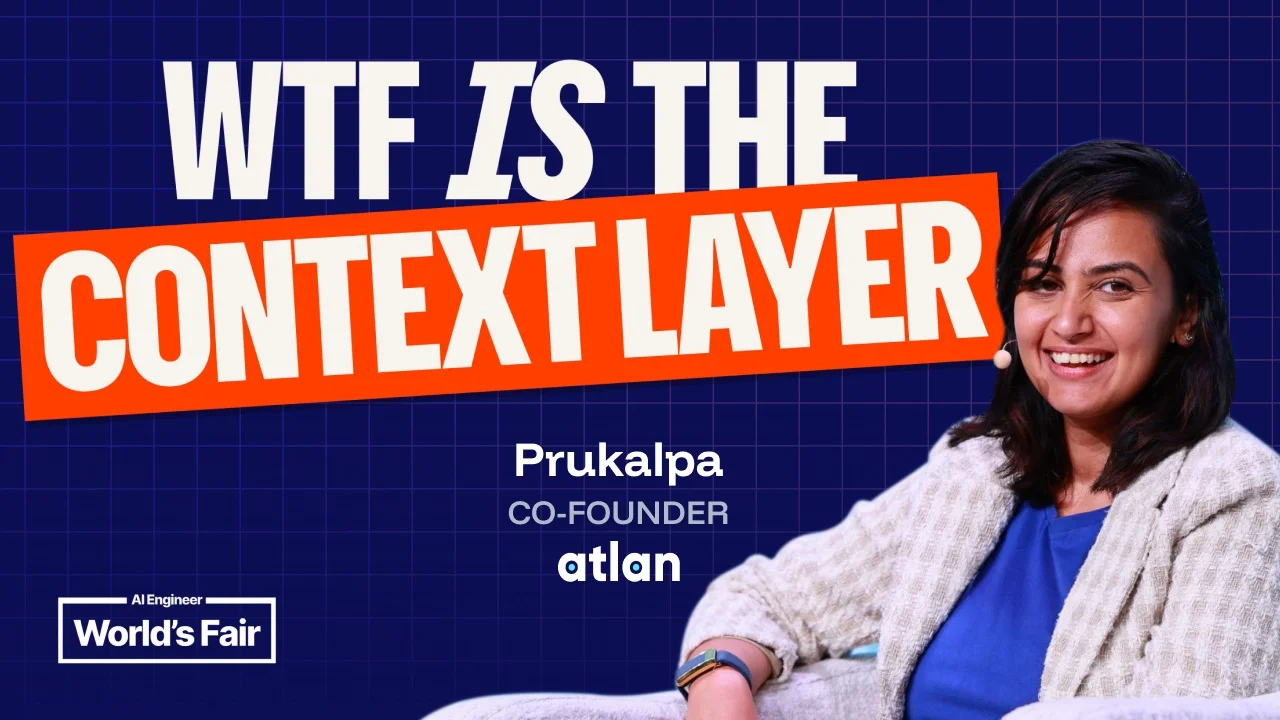
The missing infrastructure for production agents
Prukalpa Sankar, co-founder of Atlan, at the AI Engineer World's Fair on why production agents keep failing and how a shared context platform can help.
Inside Verizon’s context architecture
Walk through Verizon’s enterprise context architecture with the team that built it, including the decisions they’d redo.
The Post-AI Data Stack: A blueprint for analytics agents
See what Workday, DocuSign and Upwork learned building analytics agents the business actually trusts.

Will open context interchange ever be real?
Hear the people behind Apache Ossie and Open Knowledge Format debate what context has to become portable.
The missing infrastructure for production agents
Prukalpa Sankar, co-founder of Atlan, at the AI Engineer World's Fair on why production agents keep failing and how a shared context platform can help.
Inside Verizon’s context architecture
Walk through Verizon’s enterprise context architecture with the team that built it, including the decisions they’d redo.
The Post-AI Data Stack: A blueprint for analytics agents
See what Workday, DocuSign and Upwork learned building analytics agents the business actually trusts.
Will open context interchange ever be real?
Hear the people behind Apache Ossie and Open Knowledge Format debate what context has to become portable.
Everything you need to know about
Atlan Trident
Atlan Trident is the shared context workspace for humans and agents, and the quality loop for AI context. It shows what actually runs, whether it still works across every model and harness, and what to fix next. It holds the skills, agents, metrics and ontologies your company's AI runs on, each with an owner, a version and a record of every run, and your team uses them from the AI tools they already work in.
Trident records every turn from your AI tools and every run of your agents as a trace, and scorers judge those runs. Evals re-run an agent or skill against cases built from real sessions, so a regression shows up when a model or a version changes. Trident then drafts the fix, and the owner decides whether it ships.
No. Register the skills, plugins and agents your teams already run, and keep working in the harnesses you use today. Trident adds the quality loop on top: what actually runs, whether it still works, and what to fix next.
A skills marketplace lists skills, and an agent registry lists agents. Trident holds both, along with the metrics and ontologies agents depend on, and connects them: which agent loads which skill version, which metric it answers from, who uses it, and what each run cost. What every run teaches goes back to the skill's owner, so the context improves itself with use instead of going stale.
Yes. Your skills, metrics and ontologies live in Trident, not inside any one model or tool. Switch assistants next quarter and your context, versions and run history come with you, because every harness loads the same version from the same place.
Yes. Release each artifact to the teams that should use it. Every change records its author and version, and every run records who ran it and what it loaded, so you can show security exactly who used what.
Trident works in every harness. Claude Code, Codex and Cursor load skills through native plugins. Trident also works in Claude, ChatGPT, Copilot, Slack and Teams, and any other harness connects through MCP. A CLI covers build scripts and CI, and an SDK registers the agents your teams build.
Context Agents draft context from your data estate, and Context Engineering Studio is where teams test and certify it. Trident is where that context meets the people and agents who use it every day: shared across every tool, with an owner, a version, and the usage and cost of every run.
Trident is opening to a small group of teams first. Request early access and the Atlan team will reach out to set up your workspace.
Make context compound
across your company.
