Alation
vs Atlan
vs Atlan
Traditional catalogs weren't built for cloud-native, AI-driven workloads—they store metadata but don't activate it. Atlan changes that with automation-first, adoption centric design and open extensibility that turns metadata into a living intelligence layer across your data estate.
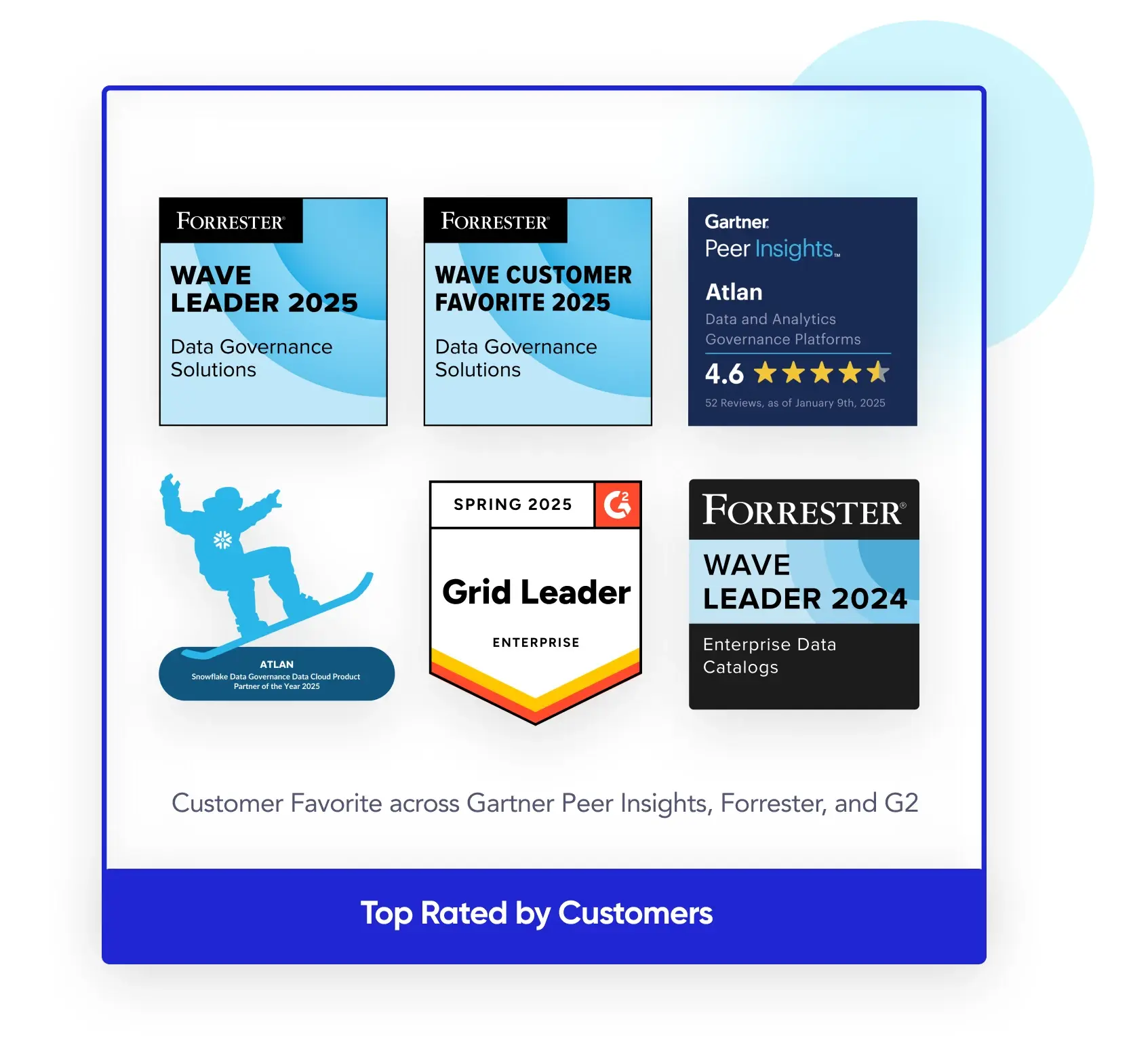
Trusted by companies with
more than $10T in enterprise value

Why top data teams choose Atlan
and never look back

Adoption-driven

Automation
Open and extensible
Data products marketplace

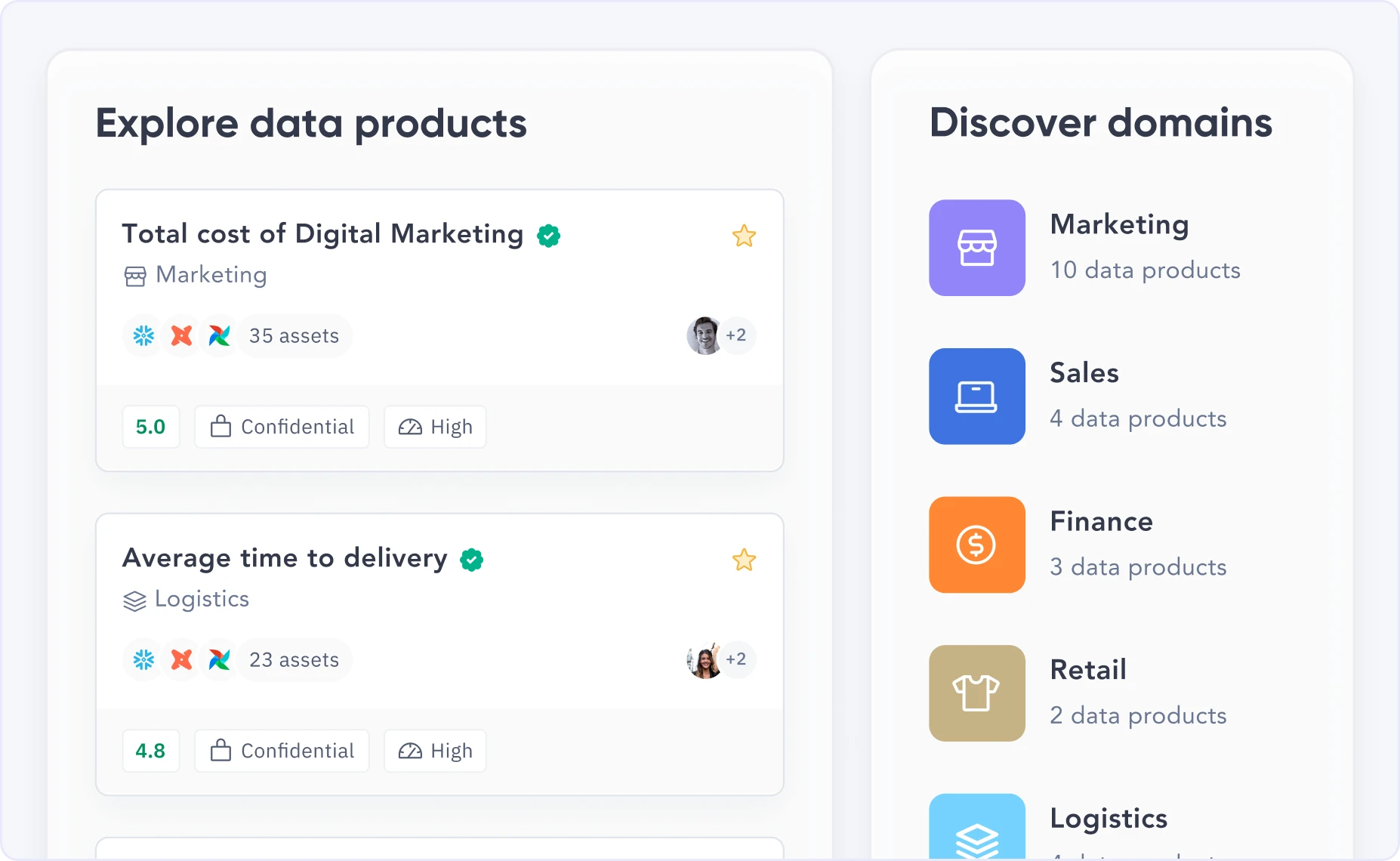
Adoption-first design
Intuitive data discovery



Industry leaders choose Atlan over legacy catalogs
Alation vs Atlan:
key differences that drive better outcomes
| What Teams Need |  |  |
|---|---|---|
| Intuitive Experience | Personalized UI with business-friendly search | Complex UI/UX. Not easy to use for non technical users |
| Embedded Context | Context in end-user tools (e.g., Slack, Microsoft Teams, Jira, GitHub, Google Sheets) | Context primarily accessed within the catalog, with limited embedded capabilities |
| Search & Discovery | Semantic, AI-powered search delivers instant, contextual results | ML-powered search with less intuitive and relevant results |
| What Teams Need | | |
|---|---|---|
| Cloud-native Architecture | Cloud-native, Kubernetes-based, future-ready | Legacy on-prem roots, difficult to scale in cloud environments |
| Rapid Deployment | Live in weeks with DIY connectors | Longer implementation cycles with complex setup that require professional services |
| Deep MDS Integration | Always first-to-launch partner innovations. E.g. native 2-way sync with Snowflake/Databricks | Limited depth with modern data stack tools. E.g. Sigma connector need 3rd party support |
| What Teams Need | | |
|---|---|---|
| AI-powered Enrichment | AI-powered enrichment, rule-based automation, AI agents driven | Manual, steward-led enrichment with a gradual AI adoption |
| Reliable Lineage | Automated, column-level end to end visibility and intuitive to use | Lineage that can be harder to interpret across layers with visually difficult UI |
| Policy & workflow management | No code DIY custom workflow builder, automated policy creation and enforcement | Rigid workflows, limited flexibility, steward-dependent processes |
| What Teams Need | | |
|---|---|---|
| Transparent Pricing | Clear, value-aligned pricing (5/5 Forrester rating) | Complex pricing structure that is not tied to outcomes (3/5 Forrester rating) |
| Customer Success | Partnership-focused model with a strong customer success team | More vendor-led, license-first engagement |
| Innovation Pace | First-to-market with GenAI, Chrome extension | Slower adoption to newer data and AI capabilities, with a less current roadmap |
| What Teams Need | | |
|---|---|---|
| AI Integration | MCP Server for AI agents, Atlan AI, Context layer for enterprise AI | AI Agent SDK, AI agents studio, ALLIE AI |
| Data Mesh Support | Data products marketplace, federated governance | Catalog-heavy and centralized model, limited federation |
| Open Platform | Iceberg-native metadata lakehouse | Closed architecture. Limited API access and extensibility |
Alation vs Atlan: what users say
Authentic voice from the data community (G2)
| Feature | | | Why it matters |
|---|---|---|---|
Ease of Use | 9/10 | 8.3/10 | Teams adopt faster with less training |
Data Discovery | 9.5/10 | 8.4/10 | Users find what they need, fast |
Data Lineage | 9.3/10 | 7.3/10 | Clear impact analysis prevents breaks |
Business and Data Glossary | 9.2/10 | 8.5/10 | Shared language, faster alignment |
Metadata Management | 9.3/10 | 8/10 | Context stays accurate automatically |
Quality of Support | 9.3/10 | 8.6/10 | Partnership approach drives success |
Overall Rating | 4.5/5 (121 reviews) | 4.4/5 (92 reviews) | Trusted by peers |
G2's analysis highlights that Atlan scores higher on Ease of Use and Quality of Support, making it easier to set up and integrate while delivering more responsive and effective support than Alation.

Recognition that validates your choice
Industry experts recognize Atlan's innovation
Forrester Wave™: Data Governance Solutions (Q3 2025)
Leader and Customer Favorite, with highest-possible scores in 15 criteria. Forrester evaluated 13 providers in this report.
Forrester Wave™: Enterprise Data Catalogs (Q3 2024)
Leader placement with the highest scores across all vendors in Current Offering and Strategy, and highest-possible scores in 15 criteria including Governance, Risk & Compliance, Data Lineage, Adoption, and Deployment and Time-to-Value.
Gartner® Magic Quadrant™: Data & Analytics Governance Platforms (2025)
Recognized as a Visionary in the inaugural MQ for this category, published in January 2025.
Atlan is a Leader in the 2025 Gartner® Magic Quadrant™ for Metadata Management Solutions
See how enterprise AI depends on modern metadata management.
Snowflake Partner of the Year (2025)
Data Governance — Data Cloud Product Partner of the Year

Frequently Asked Questions: Alation vs Atlan
Which platform delivers ROI faster: Alation or Atlan?

Is Atlan just a data catalog, or does it do more?
How do Atlan and Alation compare on governance and lineage?
Which is easier to deploy and adopt across roles—Atlan or Alation?
How open and AI-ready are the two platforms?
How does Atlan drive higher adoption across business users?
How reliable is Atlan's lineage compared to alternatives?
How is Atlan's governance approach different?
What do analysts and peer reviews say about Atlan?