
A business glossary tells humans what terms mean. Atlan's context layer gives AI agents the complete semantic picture.

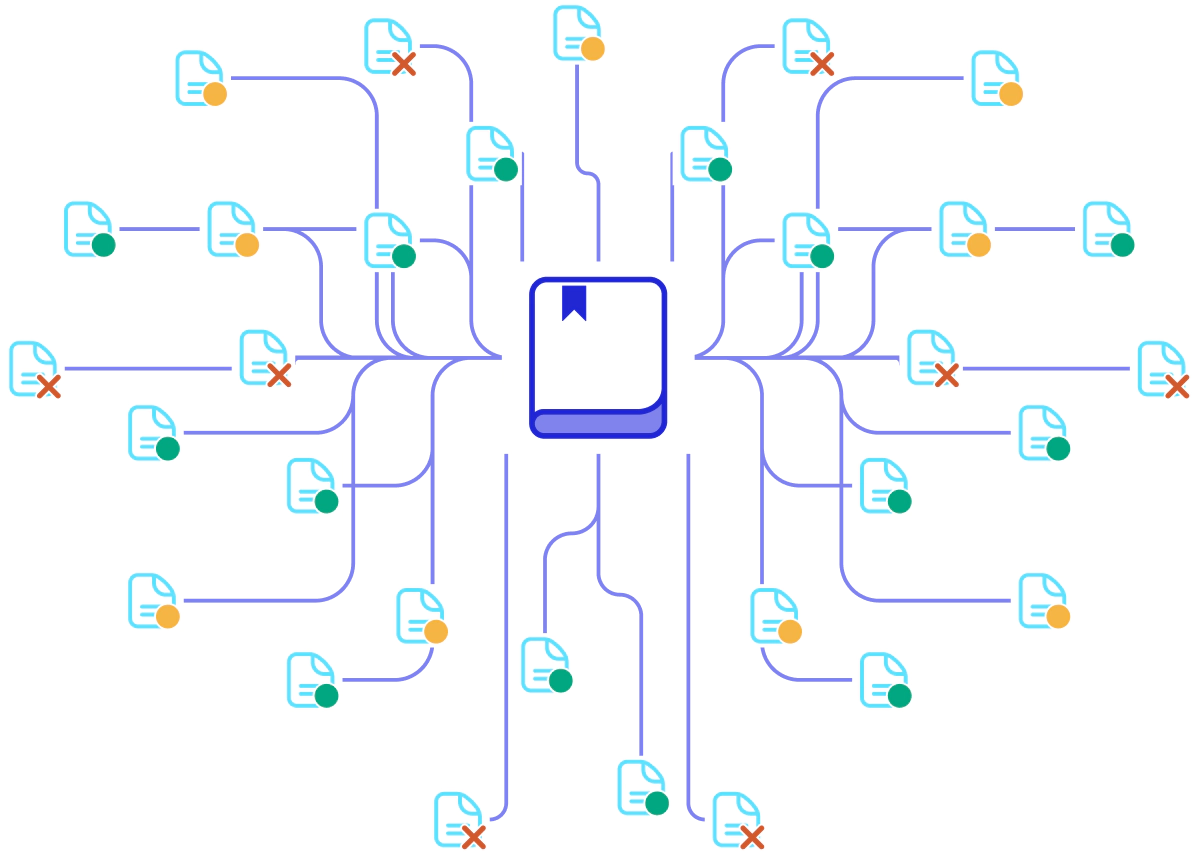
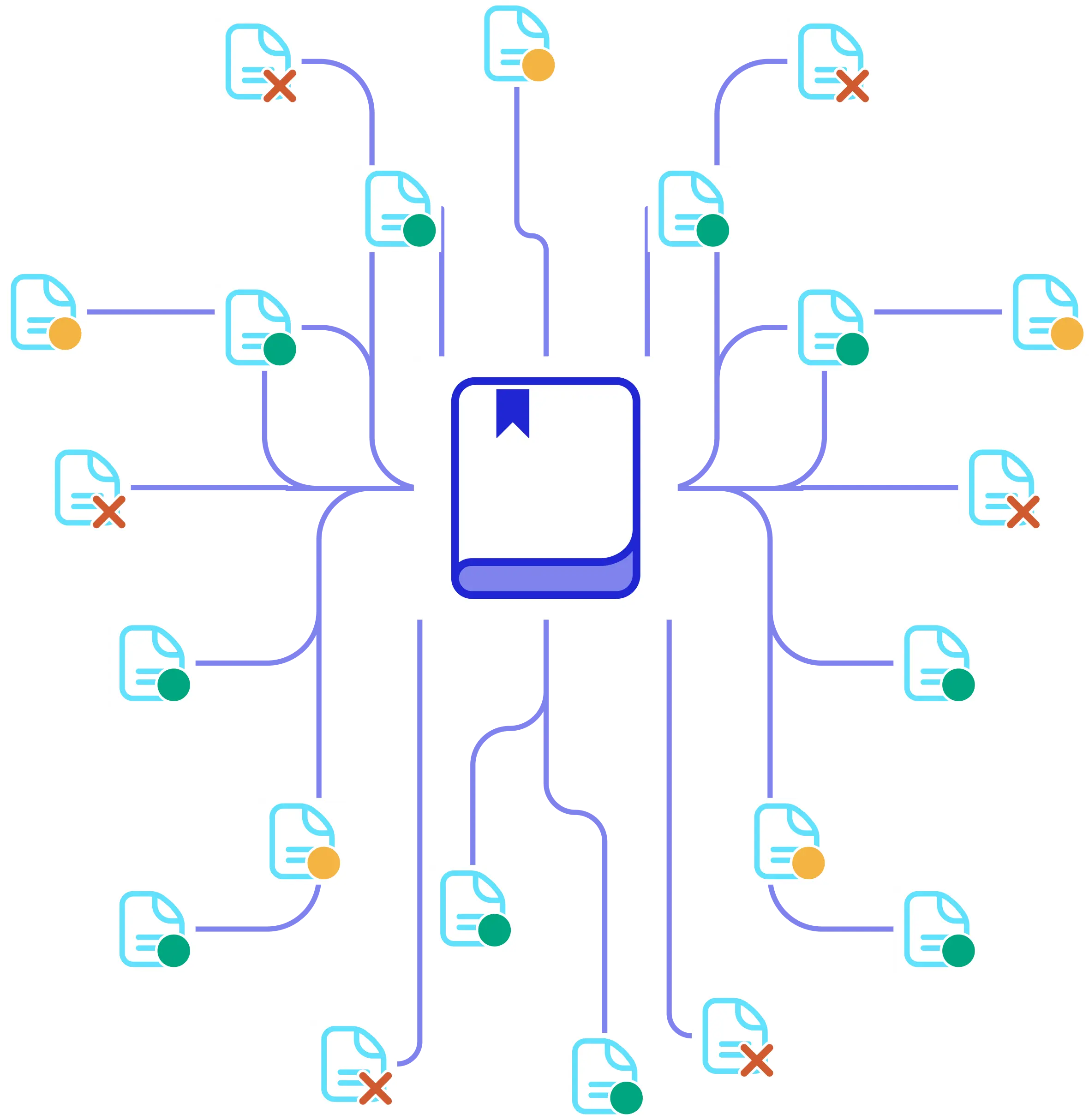
A business glossary is where it starts. Atlan's context layer gives AI agents everything beyond it.
Business glossaries were built for humans — a shared reference that told data teams what "active customer," "net revenue," or "churn" actually meant in this organization. Useful when maintained. Hard to keep current. And only one piece of what an AI agent actually needs to answer correctly.
AI agents need more than a glossary. They need to know what "revenue" means in Finance vs. Sales, and which definition applies to the question being asked. They need to know how a technical column name maps to the business term an analyst would use. They need to know that "MRR" and "monthly recurring revenue" are the same thing — and that the EMEA definition has a different treatment for professional services. And they need to know how all of those terms relate to each other: which metrics are derived from which definitions, which domains own which concepts, and where one term ends and another begins.
That's what a semantic layer is. That's what an ontology is. And Atlan's context layer includes all of it — not as separate tools that need to be integrated, but as a single, connected semantic picture that every AI agent reads from automatically.
Atlan's Context Agents — specialized AI teammates that build and maintain the semantic context layer automatically — each own a different piece of the picture. Lexis, the Glossary Bootstrapping agent, builds your business glossary from your existing definitions and domain patterns. Nexus, the Terms & Metrics Linkage agent, bridges technical column names to the business terms analysts actually use. Sage, the Metric Conflicts agent, finds where two teams define the same metric differently and locks in one certified answer. Orion, the Ontologist, maps every relationship between domains, terms, and assets — so when an agent asks what "revenue" means, it gets the right answer for the right context. All of it versioned, delivered to every agent through MCP, and connected through lineage so definitions travel with the data they describe.
From the business glossary to the complete semantic context layer.
A business glossary is where the semantic picture starts. Atlan's context layer extends it: shared metrics, semantic definitions that connect technical and business language, and an ontology that maps every relationship — all connected through lineage and delivered to every agent automatically.

Business glossary, bootstrapped automatically
Lexis — the Glossary Bootstrapping Context Agent — reads your existing definitions, column naming conventions, and domain patterns and builds the business glossary your team never finished. Every term defined, every asset documented, from signals that already exist in your systems.

Business metrics, resolved across teams
Sage, the Metric Conflicts Context Agent, finds where two teams define the same metric differently and locks in one certified answer. Nexus, the Terms & Metrics Linkage Context Agent, bridges the gap between technical column names and the business terms analysts actually use. Agents get authoritative metrics — not two conflicting definitions of "MRR."

Ontology that maps every relationship
Orion, the Ontologist Context Agent, maps what every term means in every context — and how every term, domain, and asset relates to every other. When an agent asks what "revenue" means, Orion ensures it gets the right answer for the right team, the right region, and the right use case.

All of it connected through lineage and delivered through MCP
Every definition, metric, and ontology relationship propagates along Data Lineage to every downstream asset automatically. Versioned context repos in Context Engineering Studio make the semantic layer human-editable and machine-readable. Every agent reads from the same shared truth through Atlan's MCP Server.
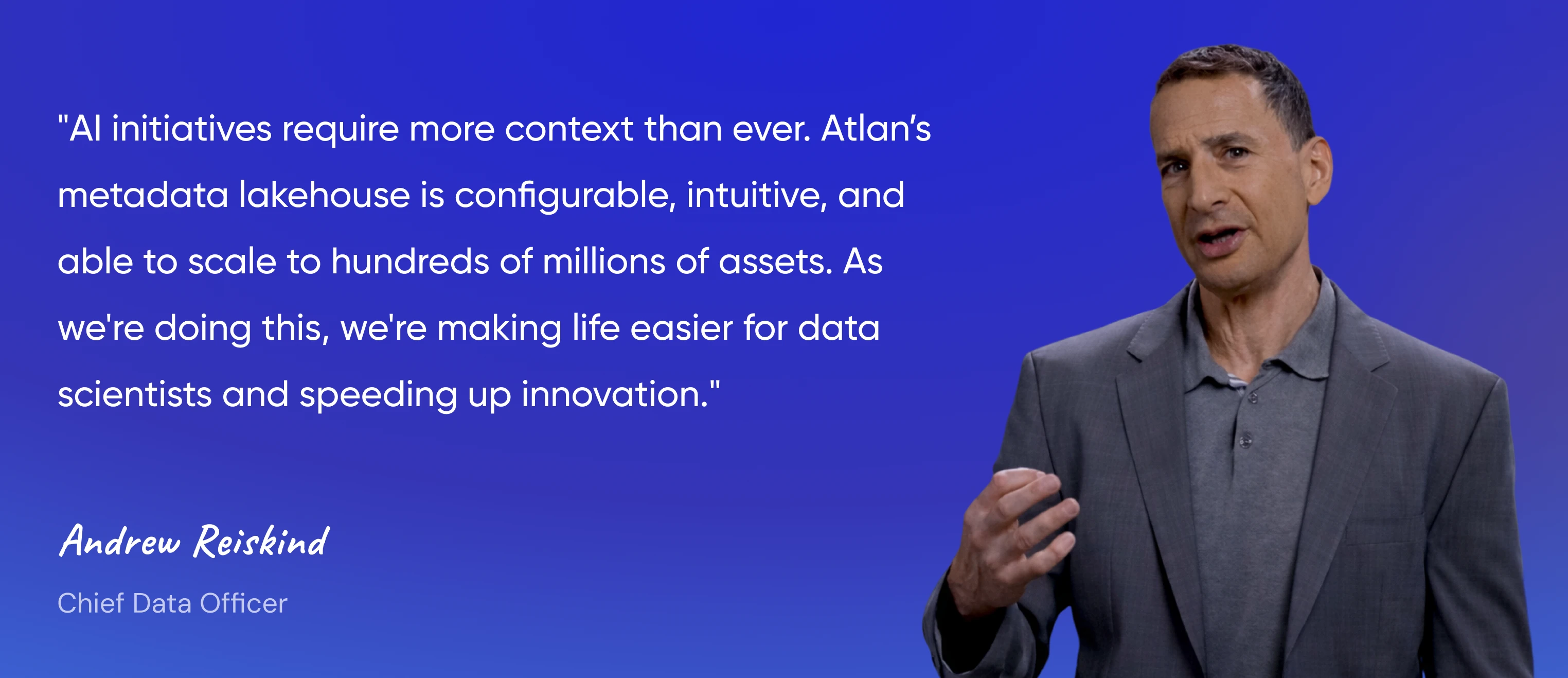
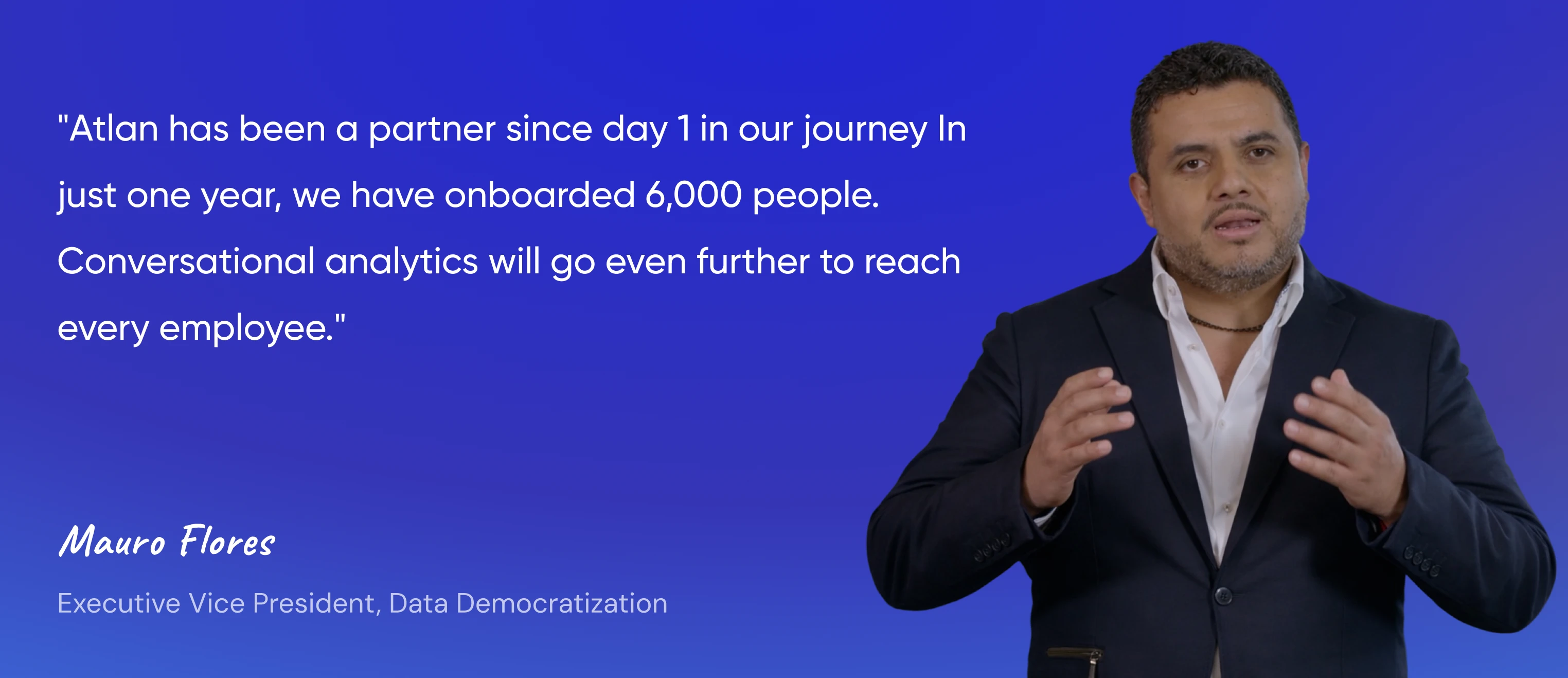
Leading AI teams use Atlan to connect context
- Watch Video
- Watch Video
- Watch Video
- Watch Video




The agents that give AI agents a complete semantic picture.
Atlan's Context Agents each own a piece of the semantic picture — Lexis builds the glossary, Sage resolves metric conflicts, Nexus bridges technical and business language, Orion maps every relationship. Together, they give every AI agent the semantic context it needs to answer correctly.


Data catalogs were built for humans... who never documented them.
In 2023, we launched the first AI documentation agent.
We called it Atlan AI. It could write descriptions automatically, but accuracy was at 75%. Good enough to show the vision, but not good enough to replace human work.
We realized AI accuracy at scale needed a rebuild.
To be accurate, AI needed to access rich signals like lineage, query history, usage patterns, relationships between assets. Atlan stored all of that, but AI couldn't use it. So we rebuilt the foundation: the Context Lakehouse.
Today, context agents outperform humans on quality.
Customers are telling us the agent-written descriptions are more accurate and more complete than what their teams were producing manually.
Start your AI-readiness sprint.
Learn how Context Agents can get you to AI readiness in 30 days.
Book a Strategy SessionRollout in 30 days, not 12 months.

Start With What Matters
Most of your catalog nobody touches. Context Agents identify your Gold Layer, Popular BI, Popular SQL, and upstream dependencies first — enriching the assets people actually use before spending cycles on the long tail. Value shows up in days, not months.

AI Scores Every Output
Each agent output carries a composite confidence score across accuracy, clarity, style, and completeness. High-confidence outputs auto-apply. Lower-confidence outputs route to humans.

Humans Decide & Govern
AI generates descriptions, classifies assets, builds metrics, and scores quality at scale. Stewards shift from documentation to certification — sampling, validating, and resolving the cases that require judgment. One click. Not 847 manual reviews.
One shared definition. Every agent. Always current.
Context Engineering Studio stores your glossary in versioned, domain-scoped context repos — so definitions are human-editable and machine-readable. Every agent reads from the same repo. When a definition changes, every agent that uses it improves automatically. No more agents working from conflicting versions of the truth.
Don't start building context on a blank page.
Don't start building context on a blank page.
The knowledge AI needs already exists in your systems of records, SQL queries, BI dashboards, and communication threads. Context Engineering Studio reads it all, drafts a semantic layer, and lets domain experts refine it. So you can ship in days, not months.

Trusted by AI-forward enterprises
"Atlan captures Workday's shared language to be leveraged by AI via its MCP server. As part of Atlan's AI labs, we're co-building the semantic layer that AI needs."
Joe DosSantos
VP Enterprise Data & Analytics, Workday

Definitions that travel with your data. Automatically.
When a term is defined or updated in the glossary, that definition propagates along lineage to every downstream asset — so every AI agent querying those assets inherits the correct, certified definition automatically.
A living graph that connects everything
and compounds everything.
A living graph that connects everything and compounds everything.
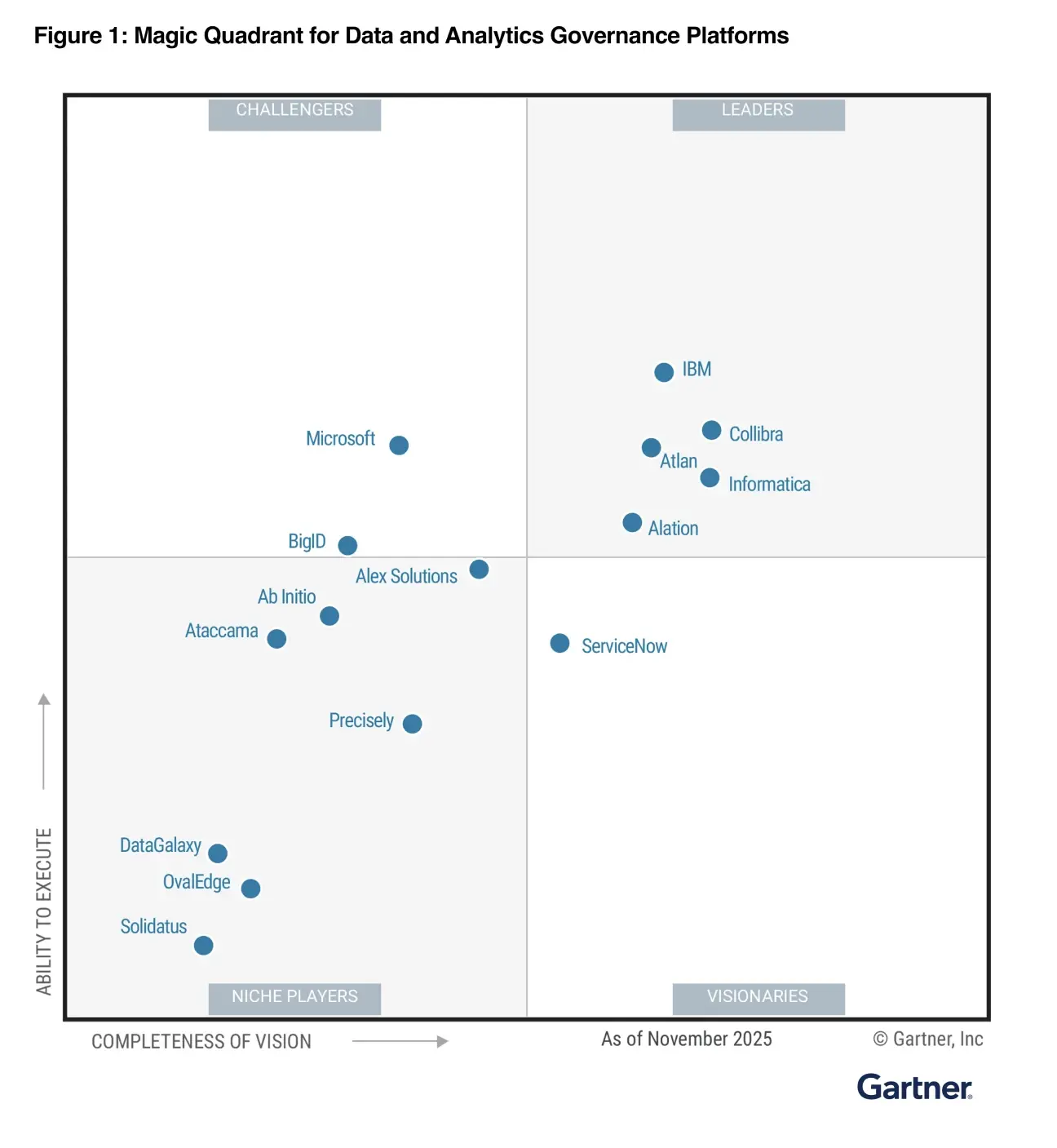
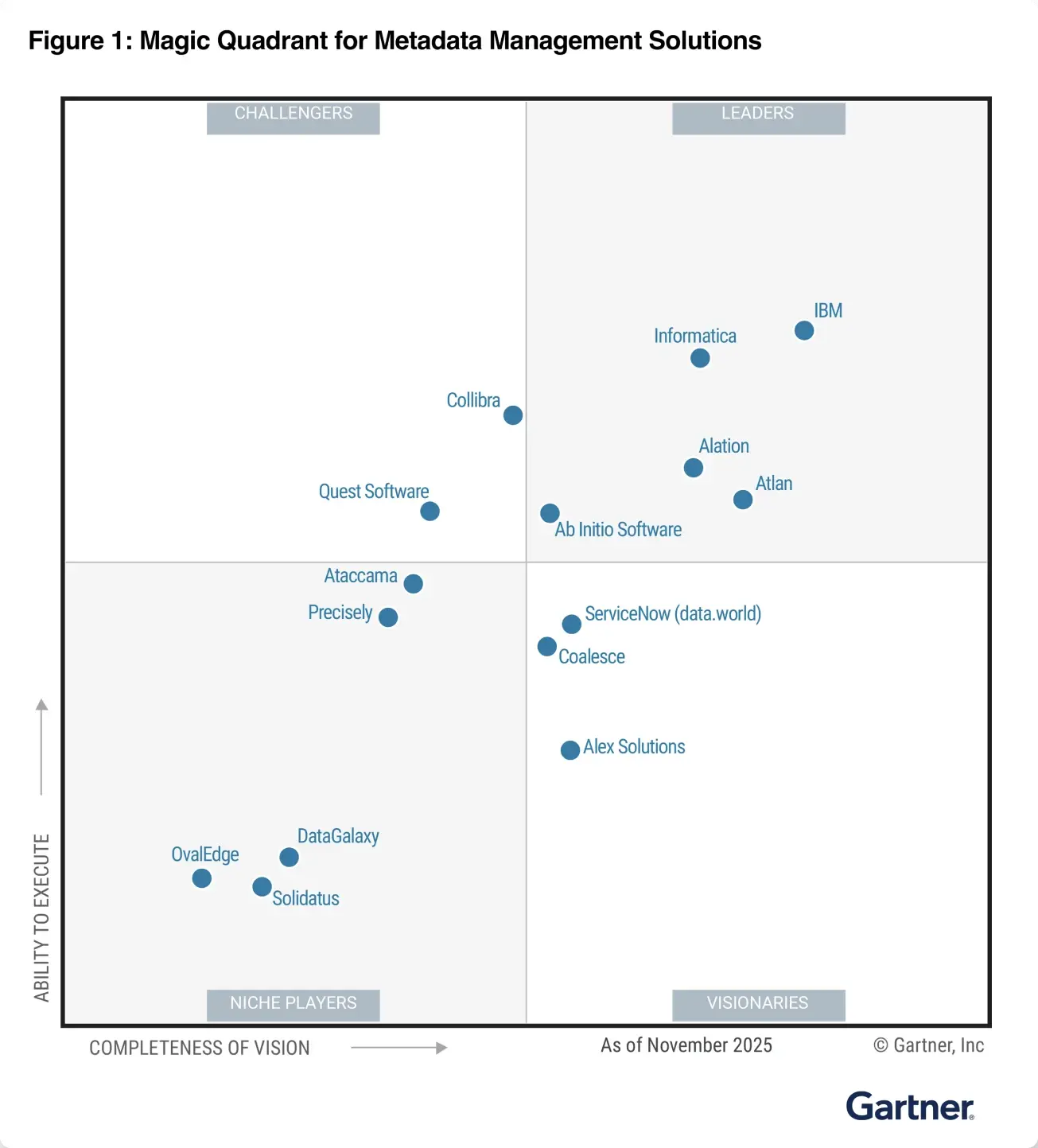
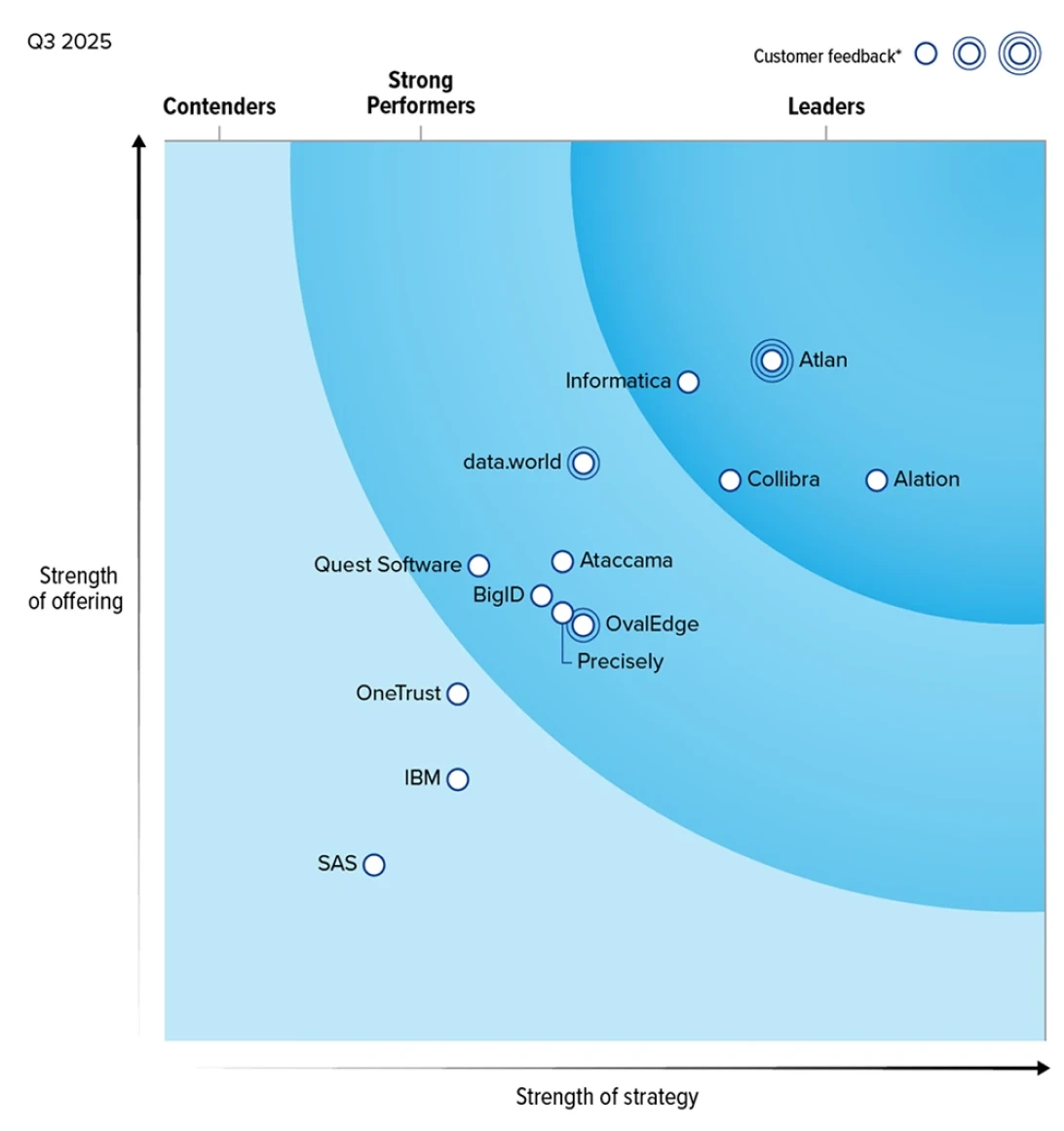
The future of context, validated by Forrester and Gartner
Every layer of the semantic context layer for AI.
Context Engineering Studio
Versioned definitions delivered to every agent.

A business glossary is where it starts.
This is the complete semantic context layer for AI.
30-min call. An honest conversation
Frequently Asked Questions: Business Glossary
What does a business glossary have to do with AI agents?

How does Lexis build the business glossary?
How does Sage resolve metric conflicts?
How do shared definitions reach AI agents automatically?
What's the difference between a business glossary and the semantic context layer?