

An agent inherits the governance rules of the data it reads. Without governance, agents leak data they shouldn’t. Microsoft’s tooling is where many teams start defining those rules across their estate. If you’re looking for Microsoft data governance tools, Microsoft Purview is a good starting point, but effective governance often requires additional open-source or off-the-shelf solutions, which this article explores alongside Purview’s offerings.
Microsoft data governance tools: What are your options within the Microsoft ecosystem?

Microsoft Purview (previously known as Azure Purview) is Microsoft’s flagship data governance tool for the Azure ecosystem, which includes SQL Server, Azure, Microsoft 365, and Power BI.
Microsoft Purview helps you understand and govern the data across your estate - Image by Microsoft.
Purview’s governance portal helps you:
- Manage and view Azure data assets
- Define and implement access policies for your Azure ecosystem
- Define and auto-assign business-friendly terminology
- Track data ownership
- Trace data lineage visually
- Measure metrics for data quality, data catalog adoption, data asset classification, etc.
- Share data without compromising data asset privacy or security
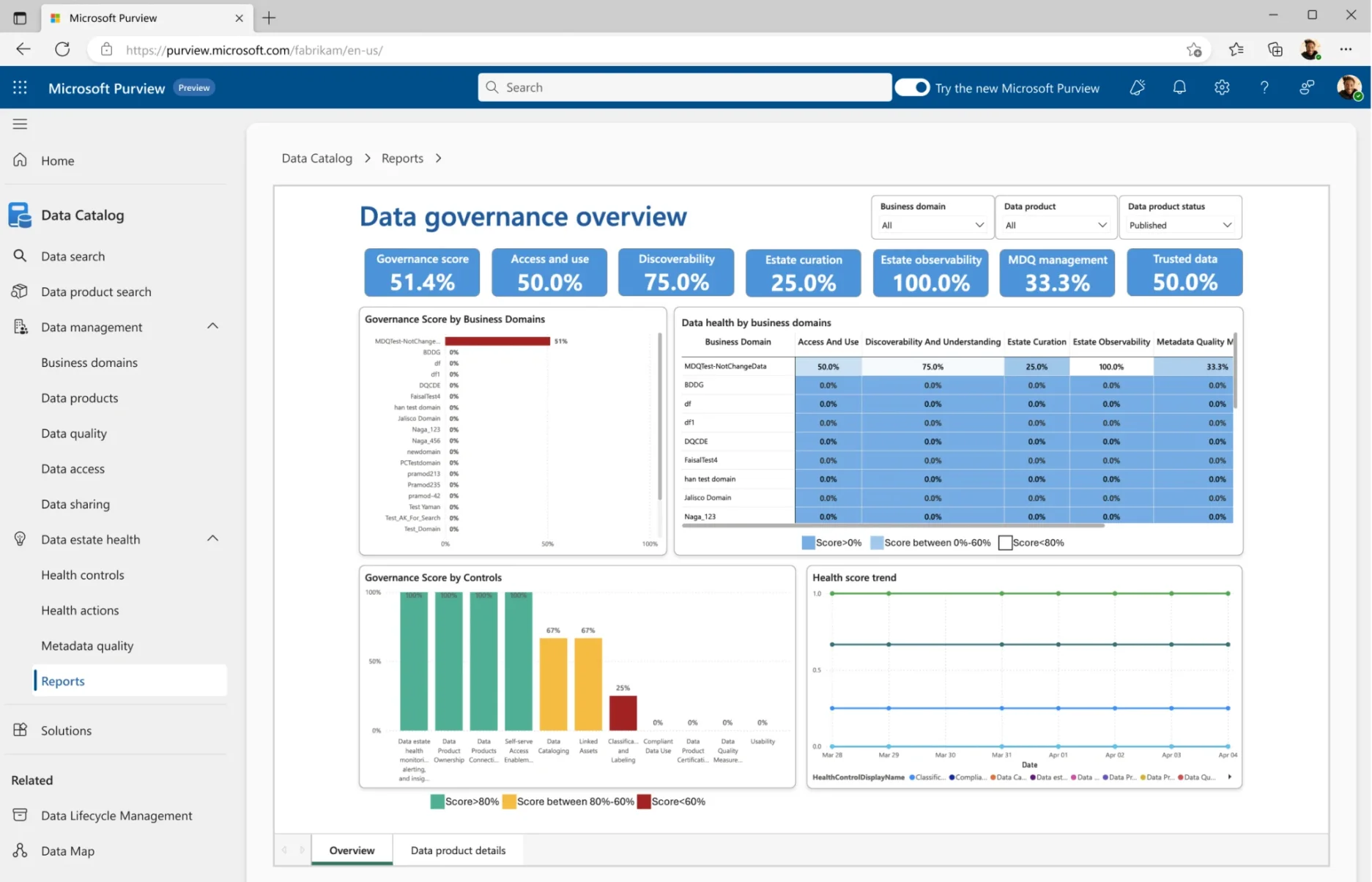
A sample data governance report in Microsoft Purview - Image by Microsoft Blog.
Purview includes several applications, such as Data Catalog, Data Map, Data Sharing, Data Estate Insights, and Data Policies, to enable data governance across the Azure data estate.
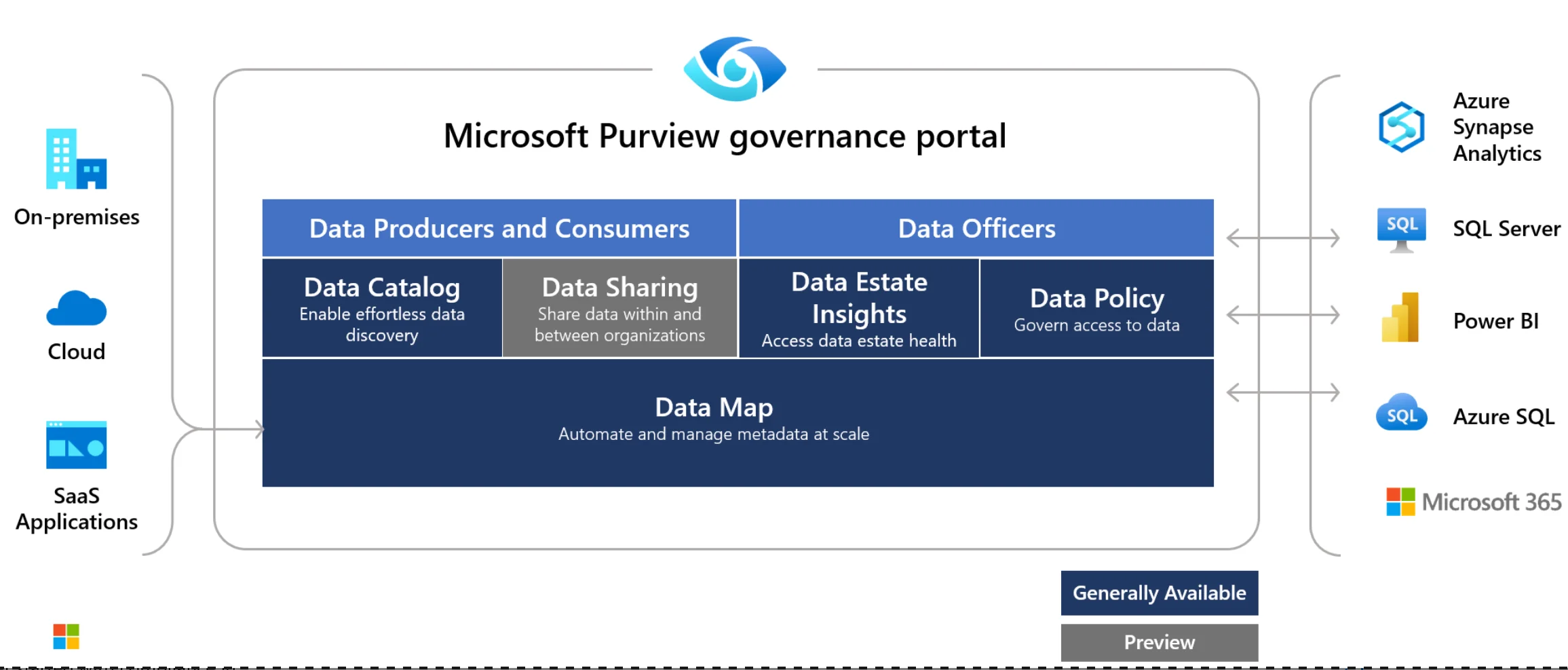
Microsoft Purview governance portal - Image by Microsoft Purview Documentation.
Let’s briefly explore these apps further:
-
Data Catalog: Find data assets, add context with a business glossary, automatically tag assets with the right glossary terms, and trace the lineage of your Azure assets visually
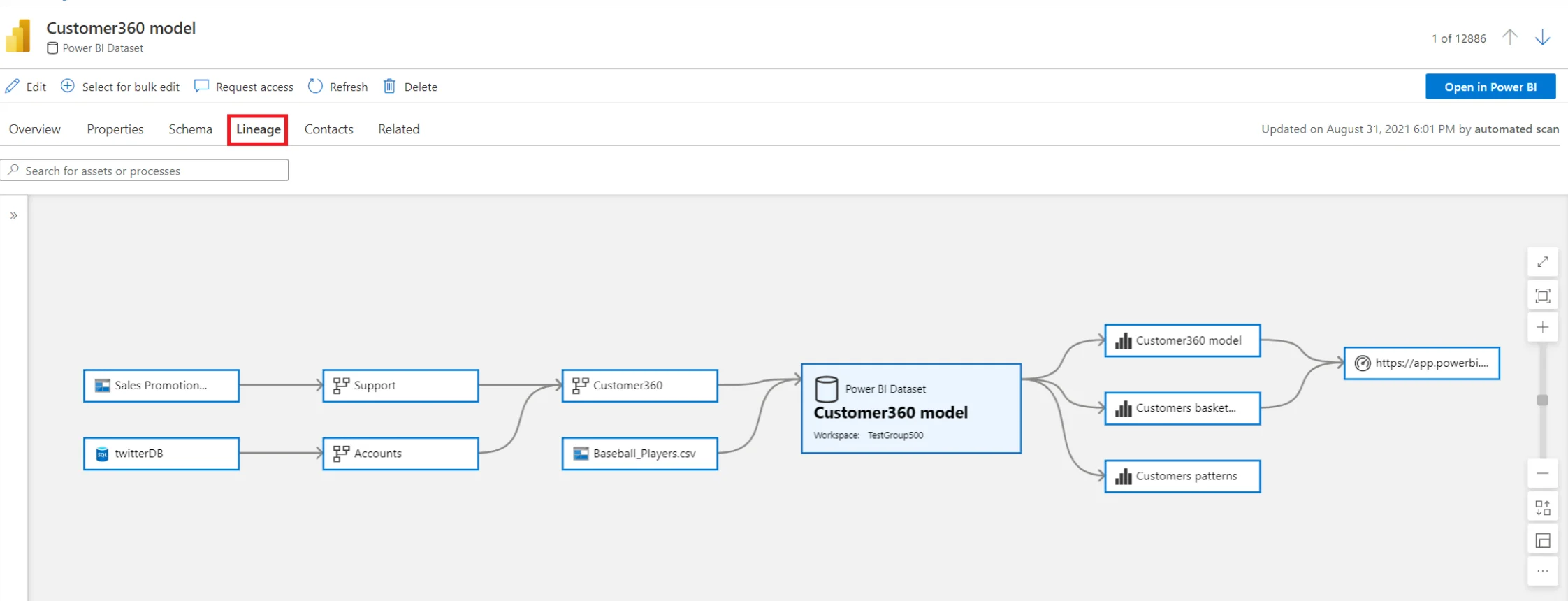
Data lineage in the Microsoft Purview Data Catalog - Image by Microsoft Purview Documentation.
-
Data Map: Integrates metadata and asset descriptions into a comprehensive map of your Azure data estate by automatically scanning and classifying data assets (including sensitive data)
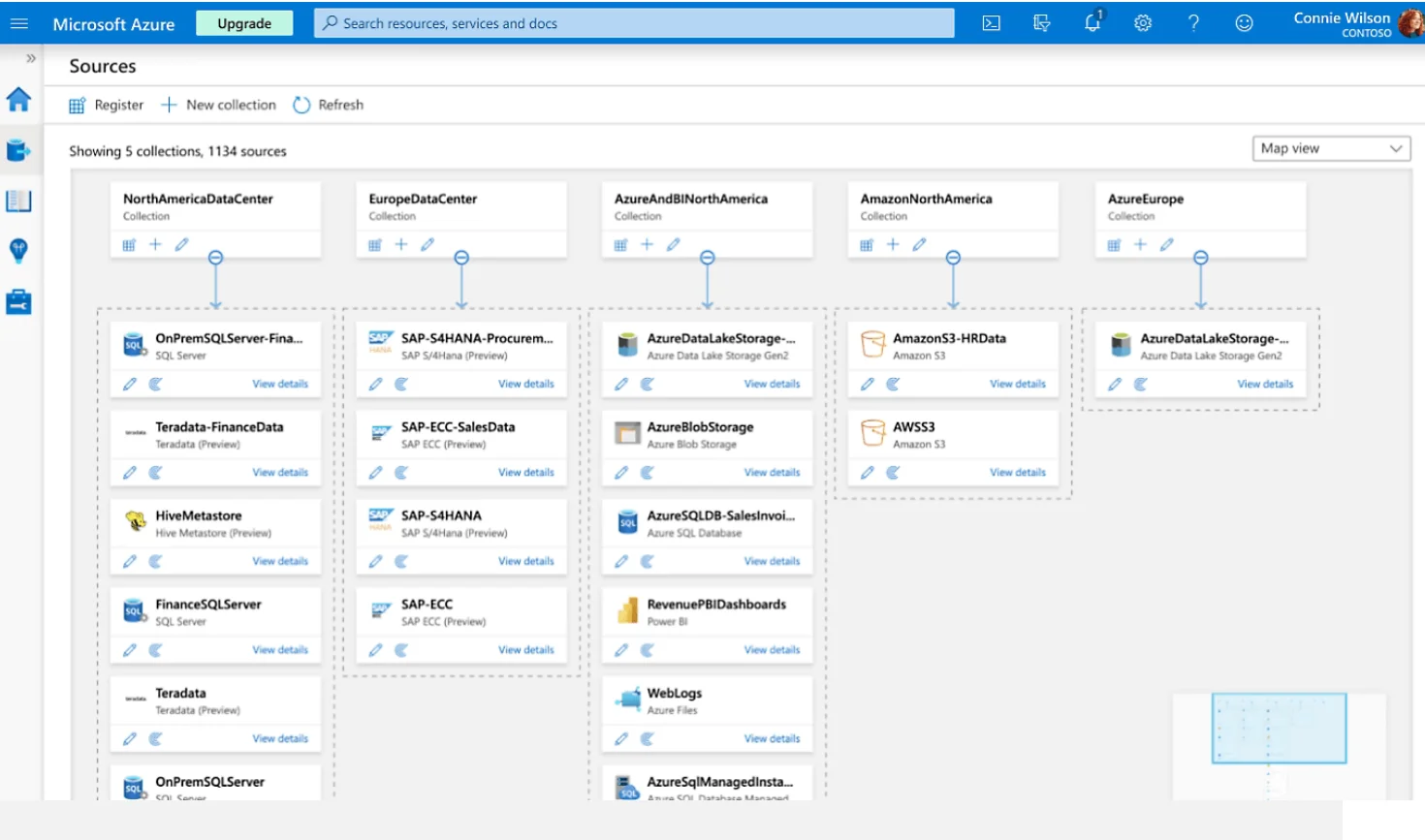
Microsoft Purview Data Map - Image by Microsoft Purview.
-
Data Estate Insights: Gives an overview of your Azure data estate, with dashboards to track the current health status of your Azure data estate, asset ownership, data catalog adoption, classification, glossary entries, and sensitivity labels
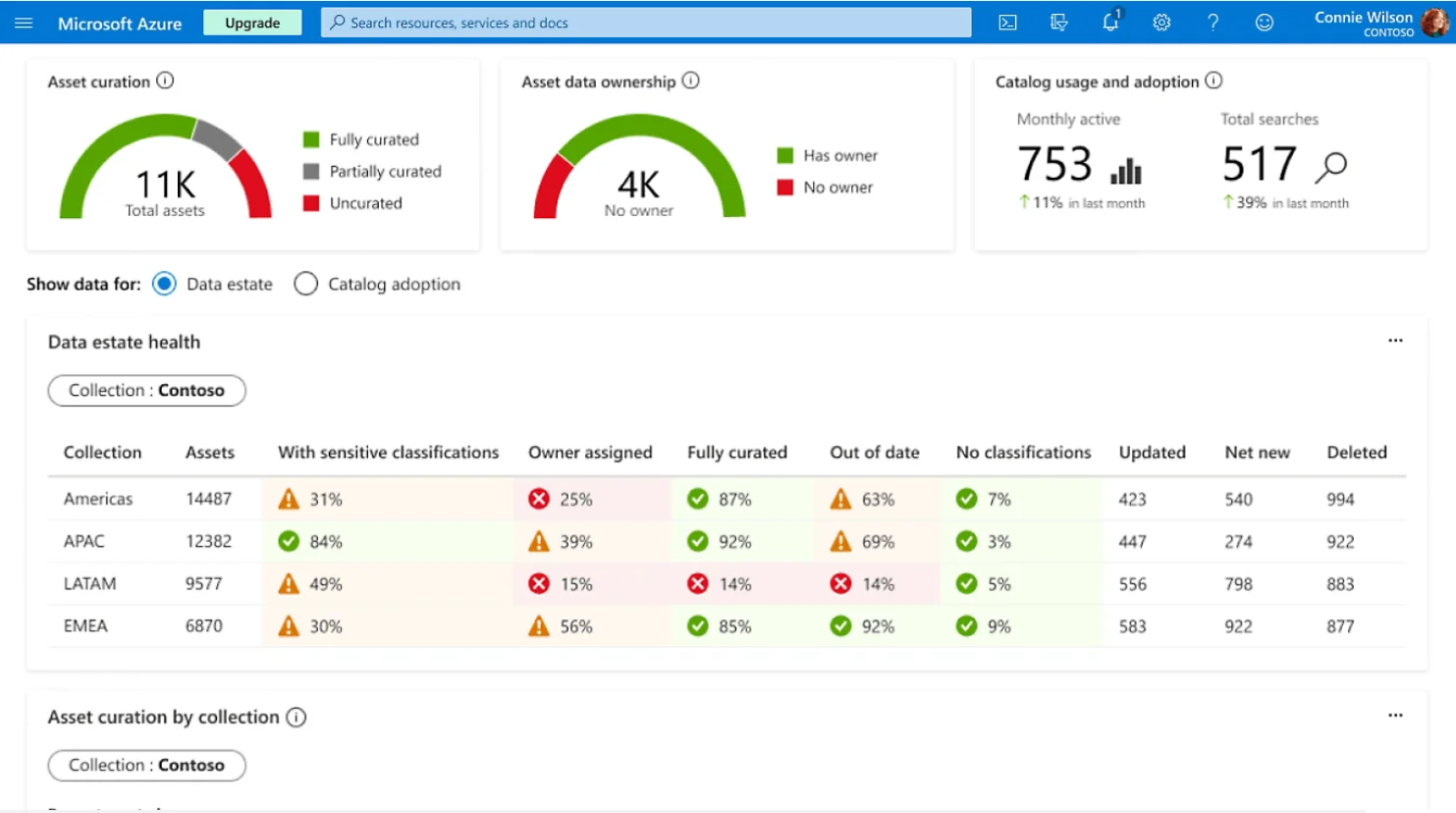
Microsoft Purview Data Estate Insights - Image by Microsoft Purview.
Microsoft Purview Data Estate Insights. Source: Microsoft Purview
-
Data Sharing: Allows secure and compliant data sharing with both internal and external users (business partners and customers)
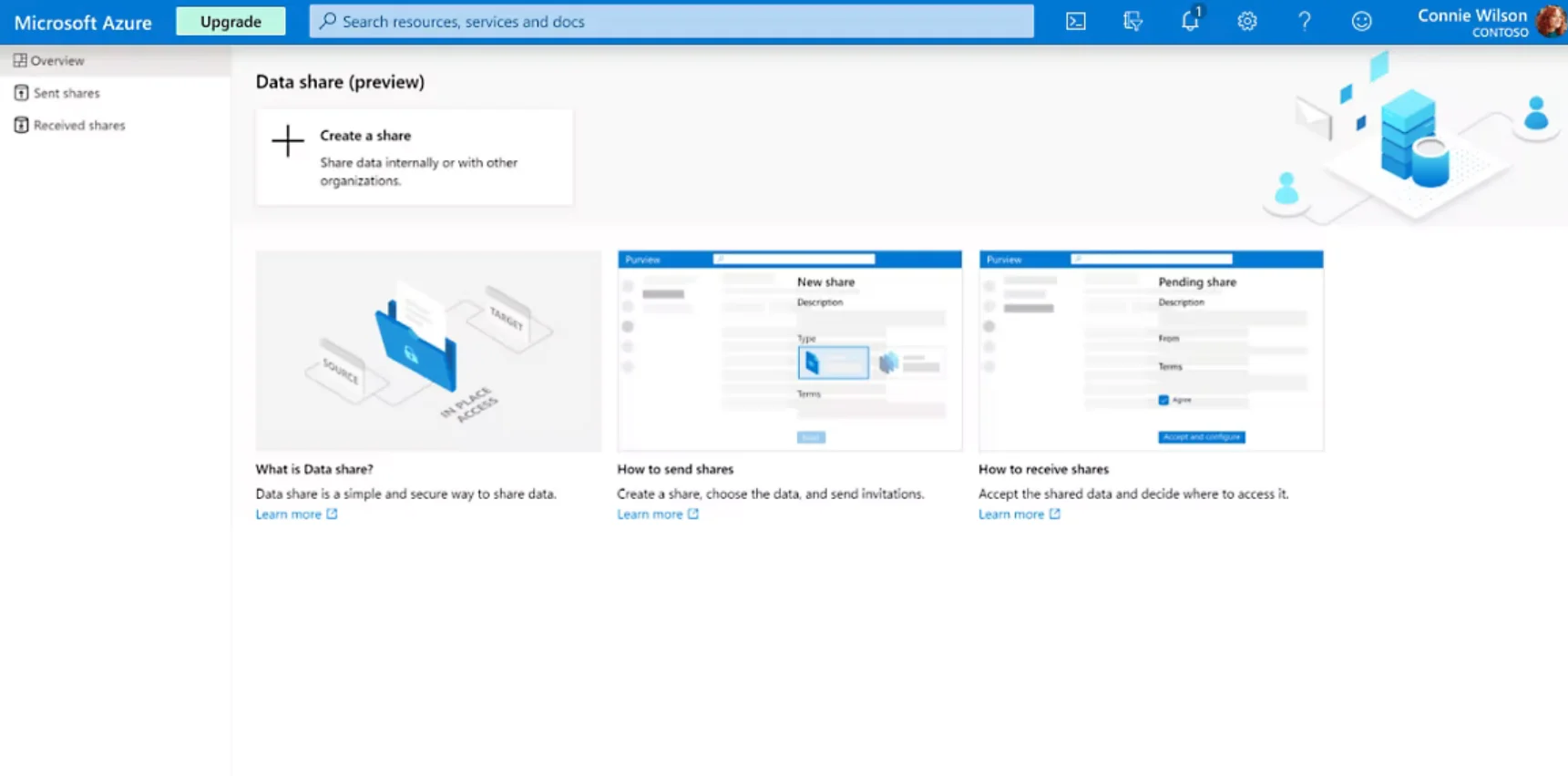
Microsoft Purview Data Sharing - Image by Microsoft Purview.
-
Data Policy: Helps define permissions and provision access to your Azure data assets
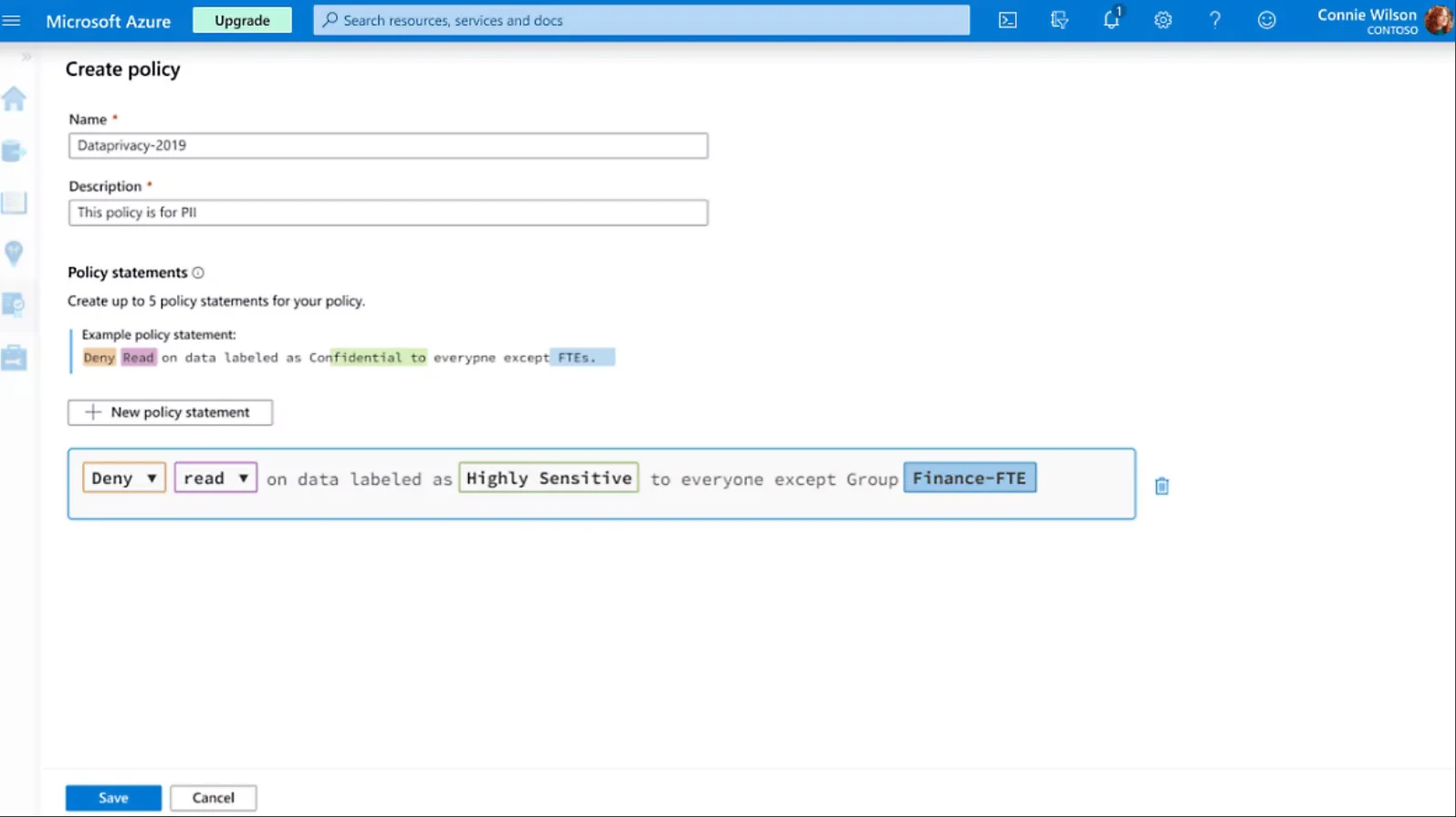
Microsoft Purview Data Policy - Image by Microsoft Purview.
Also, read → Data governance benefits on Azure
Are there any other data governance tools in Microsoft’s ecosystem?
Besides Microsoft Purview, Microsoft offers other tools to handle specific aspects of data governance, such as compliance, privacy, and security.
For instance, Microsoft Priva is a set of solutions for privacy risk management, consent management, privacy assessments, standardized compliance, and more.
Meanwhile, Compliance Manager helps you automatically assess and manage compliance across your multi-cloud environment.
It’s crucial to note that these tools are interoperable with Microsoft Purview, allowing you to centralize your data governance efforts.
Microsoft data governance tools compared: Purview, OneLake catalog, and Unity Catalog on Azure Databricks
Most teams evaluating Microsoft data governance tools already run Purview somewhere in their Azure estate. The harder question is what it covers on its own, and where OneLake catalog, Unity Catalog, and a layer that spans all three actually pick up the rest.
| Tool | Native scope | Classification / sensitivity labels | Lineage | Cross-platform reach | Best native fit |
|---|---|---|---|---|---|
| Microsoft Purview (Data Map / Unified Catalog) | Azure, Microsoft 365, Power BI, Fabric, SQL Server | Strong on Microsoft-native sources; varies elsewhere (Snowflake gets auto-classification and sensitivity labels, Databricks Unity Catalog gets auto-classification but no sensitivity labels, Amazon Redshift and MongoDB get neither) | Native and full inside Azure, Fabric, and Power BI; on non-Microsoft sources, often limited to whether that source was a source or sink in an Azure Data Factory or Synapse pipeline, not native cross-system lineage | Scans 20-plus non-Microsoft sources, including Snowflake, Amazon S3, BigQuery, and Databricks, but access-policy enforcement stays Microsoft-native across nearly all of them | The classification, sensitivity-label, and DLP engine for a Microsoft-centric estate |
| OneLake catalog (Fabric’s built-in catalog) | Fabric items across a tenant: lakehouses, warehouses, semantic models, reports, and more | Surfaces Purview’s sensitivity-label and Data Loss Prevention coverage rather than running its own classification | Governance health and endorsement tracking for Fabric items; not a lineage engine on its own | None by design; scoped entirely to the Fabric workspace | Day-to-day discovery and governance health for what’s already inside Fabric |
| Unity Catalog on Azure Databricks | Databricks catalogs, schemas, tables, and AI/ML assets | PII tagging and SQL-style access grants native to the platform | Automatic and column-level for anything run through Databricks compute, aggregated across workspaces on the same metastore | Runs on AWS, Azure, and GCP, but the lineage graph is per metastore; non-Databricks systems get added as external assets, manually through the UI or API, or automatically for pipelines ingested via Lakeflow Connect | Lineage and access control for workloads that live inside Databricks compute |
| Atlan (cross-platform context layer) | Metadata across Fabric (workspaces, reports, dashboards, dataflows, pipelines, and notebooks), Databricks (catalogs, schemas, tables, AI models), Purview-governed Azure assets, and 80-plus other connectors including Snowflake, BigQuery, and Redshift | One classification and tag model applied consistently across every connected source | One lineage graph spanning Fabric, Databricks, and Purview-governed assets together, down to the column level where the source supports it | Built for this specifically: syncs each tool’s metadata into a single graph instead of replacing what it already enforces. Access context is read-only, with no write-back to source systems. The Purview relationship runs through open APIs on both platforms; there’s no native Purview connector, and the sync’s direction and scope beyond metadata aren’t confirmed | The cross-platform context layer for teams whose estate already spans more than one of the tools above |
Each does its own job well inside its own boundary. None of the three Microsoft-and-Databricks-native tools was built to be the layer that spans all three. The table below picks up from there.
| If your situation is… | Reach for… | Because… |
|---|---|---|
| Single-cloud Azure, Fabric is your only analytics estate, and you need sensitivity labels and DLP tied into Microsoft 365 compliance tooling | Purview | It’s the Microsoft-native policy, classification, and DLP engine, already wired into Compliance Manager and Information Protection |
| You live inside Fabric day to day and want to know what Fabric items exist, their governance health, and who has access, without leaving Fabric | OneLake catalog | A purpose-built, Fabric-scoped discovery and governance UI embedded in Teams, Excel, and Copilot Studio, that already surfaces Purview’s sensitivity-label coverage instead of duplicating it |
| Databricks is your primary compute layer, and most of your lineage-worthy activity (Spark jobs, SQL queries, notebooks) runs there | Unity Catalog | Automatic, column-level lineage native to the platform for anything processed through Databricks compute |
| Your estate spans Fabric, Databricks, and Snowflake or other warehouses and SaaS tools, and you need one glossary, one lineage graph, and one governance experience business users will actually use across all of it | Atlan, alongside Purview, OneLake catalog, and Unity Catalog | None of the three native tools is built to be the cross-platform layer; Atlan syncs their metadata into one graph rather than replacing what each already enforces |
If your estate stops at Fabric and Databricks, the four rows above cover it. Once it doesn’t, the alternatives worth a closer look start here.
Microsoft data governance tools: Alternatives
While Microsoft Purview offers a good foundation for data governance, organizations with multi-cloud data environments or specific requirements may find that their needs extend beyond the capabilities of Microsoft’s ecosystem.
For instance, if your main data lake is Databricks or your data warehouse is Snowflake, then you need a data governance solution that can accommodate these modern data tools.
Best-in-class cloud agnostic solutions can provide greater flexibility, broader compatibility, and specialized features tailored to unique data governance challenges.
Atlan: The best data governance platform to complement Microsoft data governance tools
Here’s how Atlan enhances and extends Microsoft Purview’s existing data governance capabilities:
-
Lineage for a single pane of glass: Atlan reaches every corner of the data estate with out-of-the-box connectors and open APIs to track lineage at the granular table and column level. As such, you can see where a particular asset came from, all the way to its source.
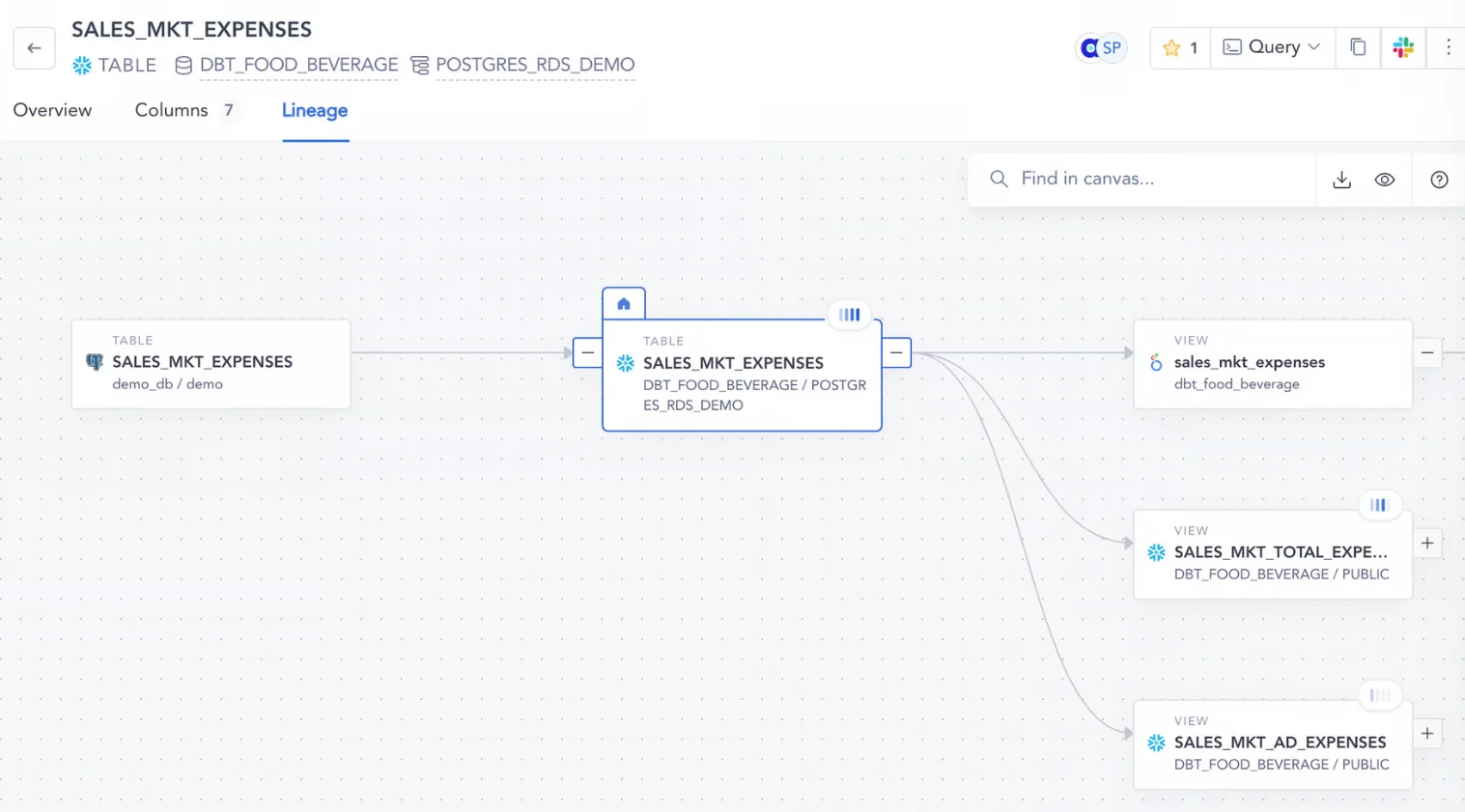
Actionable, cross-system, column-level lineage mapping in Atlan - Image by Atlan.
Atlan also makes lineage actionable by embedding it into your workflows. So, if you notice a data issue, you can quickly investigate its lineage, create a ticket in Jira, and notify downstream consumers via Atlan announcements or Slack. This makes root cause and impact analysis a breeze.
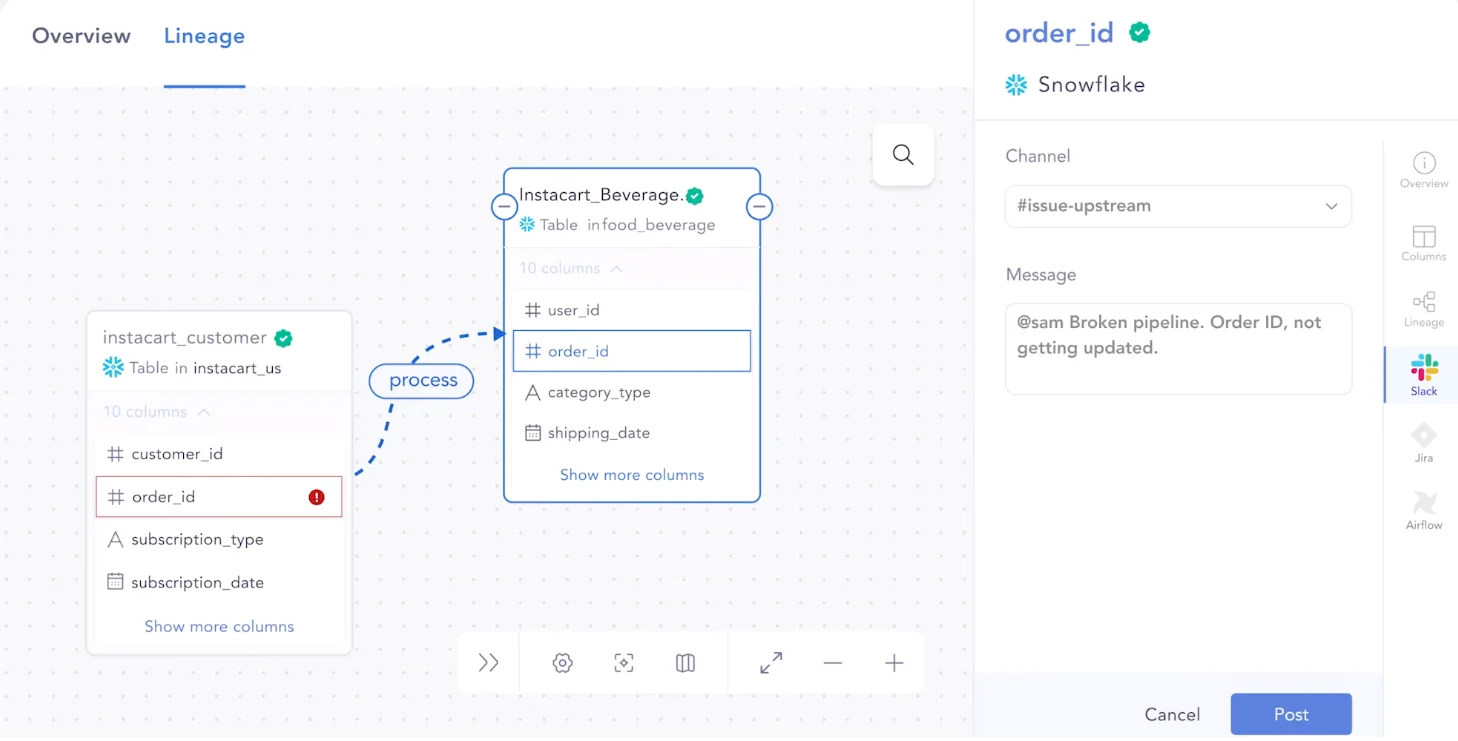
Embedded collaboration in action — posting a message on Slack from Atlan, via lineage - Image by Atlan.
-
Automation for faster time-to-value: Several governance projects fail because it’s tedious (or impossible) to map the entire data estate and maintain accurate, updated metadata for every asset. Atlan has built automations to capture and contextualize metadata, auto-propagate data asset classification, auto-generate audit logs and more.
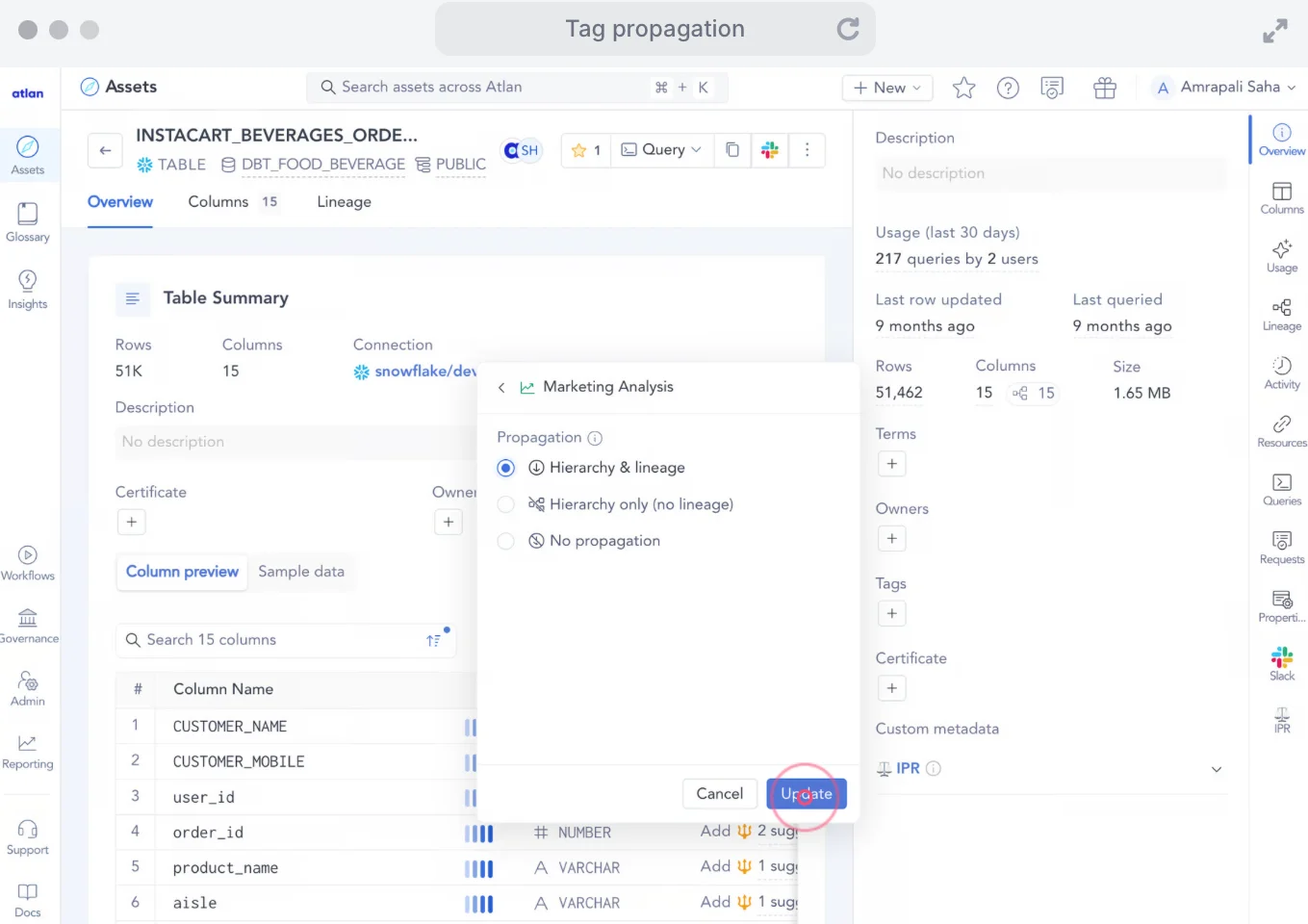
Automatic policy propagation by hierarchy or lineage (or both) in Atlan - Image by Atlan.
Additionally, Atlan AI can auto-suggest documentation based on metadata, such as source code, query logs, and usage patterns, adding better context to your Azure data assets.
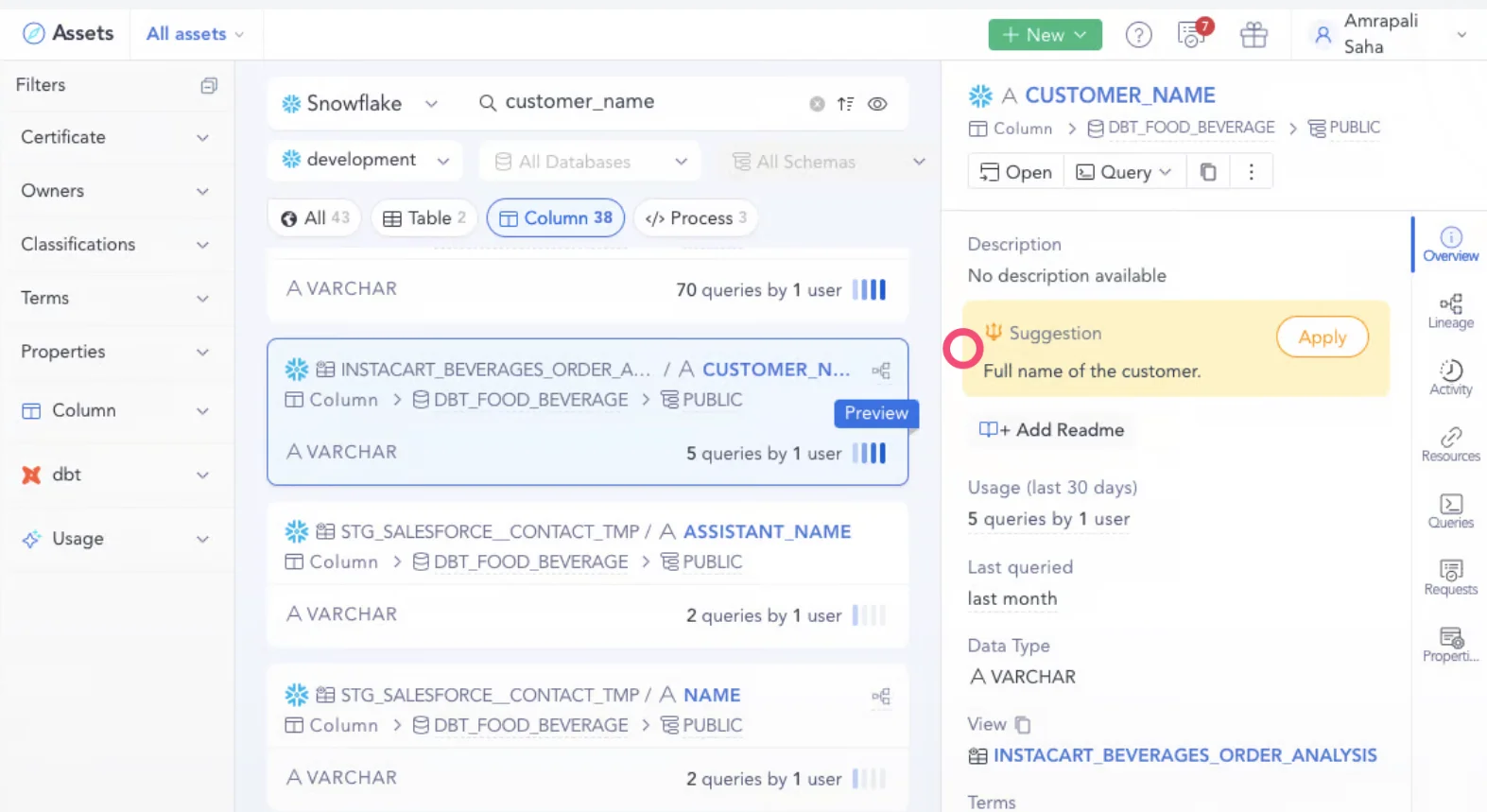
Atlan AI suggesting descriptions after reviewing the metadata of similar assets - Image by Atlan.
-
Configurable and flexible (per domain, personas, and projects): You can curate personalized experiences for different roles and types of users with Personas and Purposes. You can also customize granular access policies (for data and metadata) for diverse users and groups and set up custom masking policies and permissions.
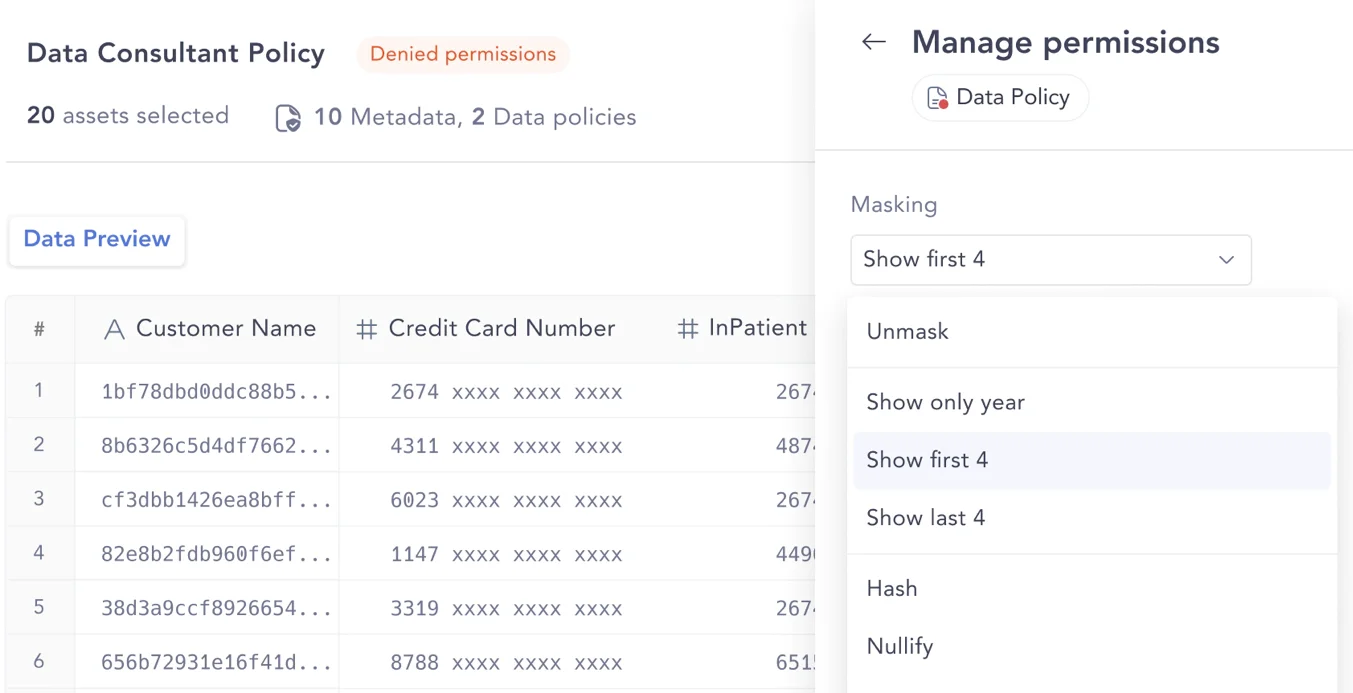
Masking and hashing policies in Atlan - Image by Atlan.
-
Extensible platform approach: Atlan’s open architecture makes it easier to connect the platform with various tools in your data stack and quickly introduce new capabilities, while enforcing data governance policies at the source. As a result, you can set up a well-governed data estate at scale, without compromising security or compliance.
How Yape, Telefónica Tech, Commonwealth, and Tide transformed their data governance initiatives with Atlan
Yape
Consider Yape, the largest digital wallet in Peru. Yape’s data stack is based on Microsoft Azure and Databricks is their primary data source.
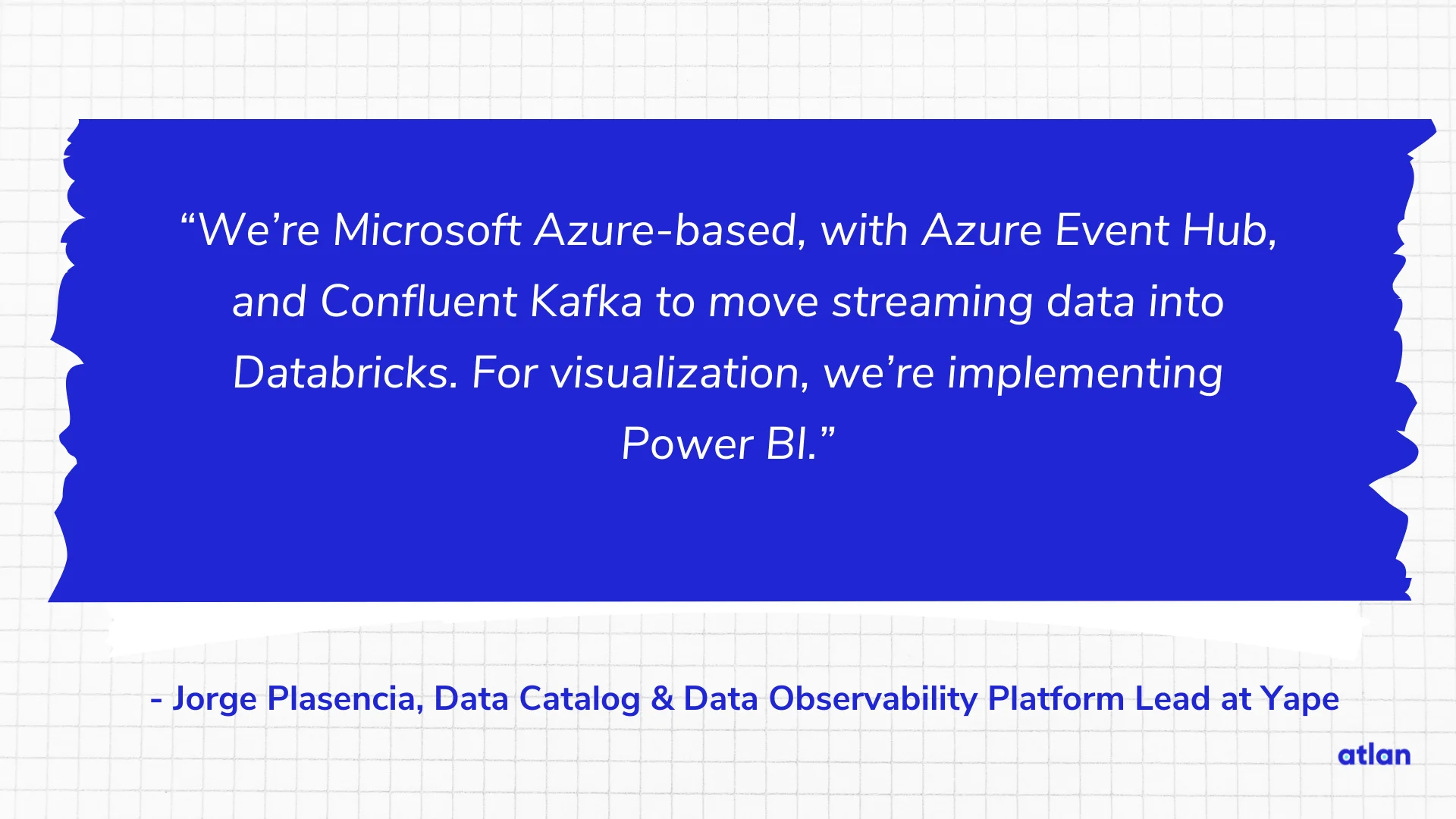
Yape chose Atlan as its data governance solution because of its simple UI, extensive connectivity with Yape’s data ecosystem, and rich documentation. Yape particularly observed that Atlan had “the best UI in the market,” bringing them a step closer to democratizing access to data.
Telefónica Tech
Argentinian telecommunication enterprise Telefónica Tech also has a stack based on Microsoft Azure. They use Data Factory for orchestration, Databricks for ETL, blob storage, and data lake, and Snowflake as the data warehouse.
Telefónica Tech adopted Atlan to facilitate end-to-end visibility and traceability, while strengthening security.
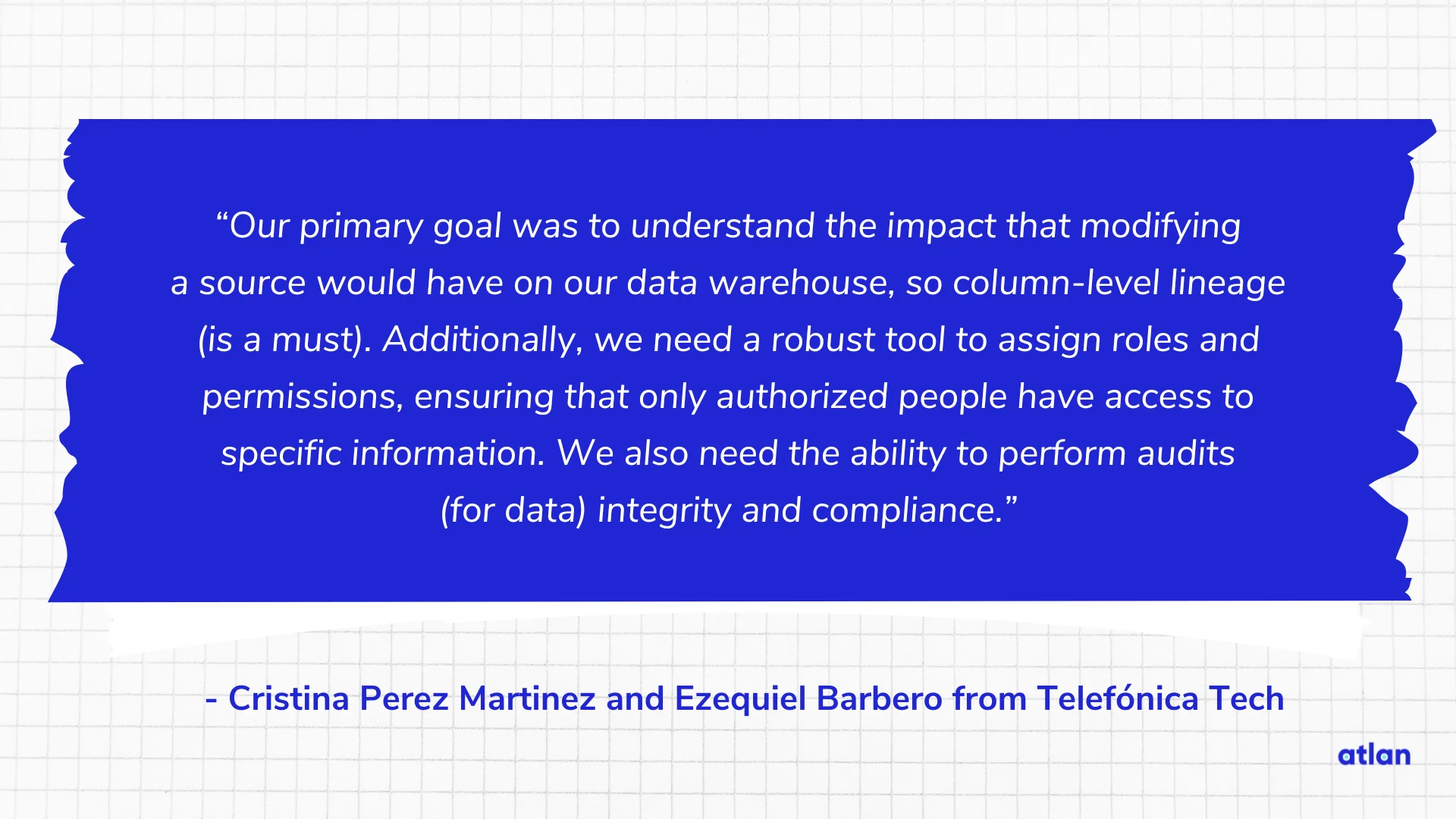
Telefónica Tech adopted Atlan to facilitate end-to-end visibility and traceability - Image by Cristina Perez Martinez and Ezequiel Barbero from Telefónica Tech.
Commonwealth
Similarly, the financial services firm Commonwealth, also running on Azure, assessed data catalog solutions primarily based on their user-friendliness for non-technical users.
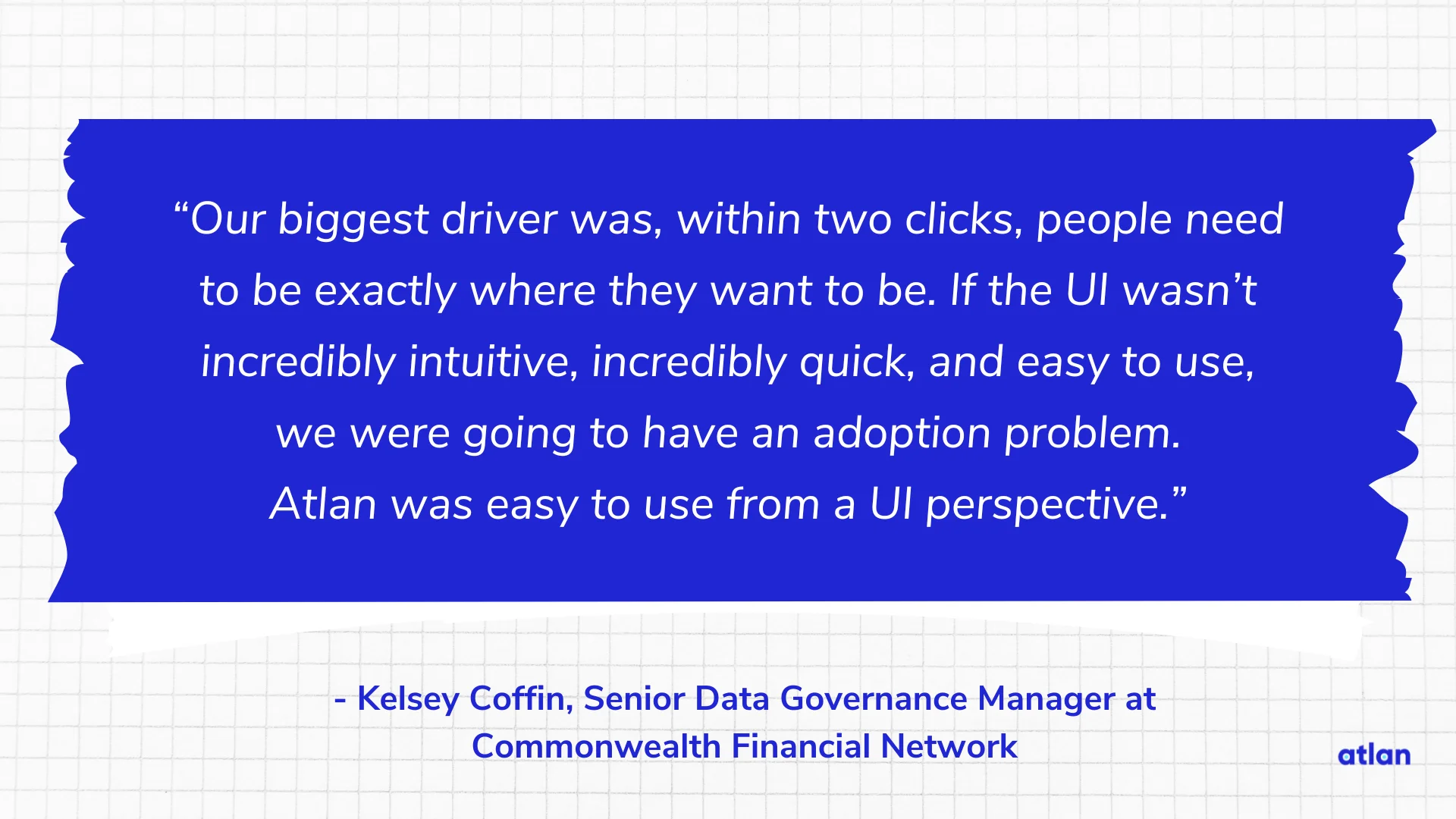
Tide
Meanwhile, Atlan’s automation and AI capabilities can dramatically shorten the time spent on documentation, data classification, compliance audits, etc., which benefits a massive financial services firm like Tide.
Tide combined its lineage information with Atlan Playbooks to create automated processes that identified, tagged, and classified all sensitive information throughout its data estate. Initially, Tide had anticipated this compliance exercise would take 50 days; however, with Atlan’s column-level lineage and automation, those 50 days became five hours.
Go deeper on Purview and Microsoft governance
- Microsoft Purview Unified Catalog: what it governs, and why agent grounding sits in Fabric IQ instead.
- Purview vs. Unity Catalog, for estates that run Databricks on Azure.
- Microsoft Purview alternatives.
- Purview’s controls for AI agents, from DSPM’s agent inventory to prompt DLP for Copilot.
- Microsoft Fabric governance and the OneLake catalog.
- Data governance on Azure and Power BI data governance.
- Setup guides: a data catalog for Microsoft SQL Server and a data catalog for Power BI.
The platform these tools govern is covered in the Microsoft Fabric guide.
Final thoughts
Microsoft’s data governance ecosystem, led by Purview, helps you manage your data estate in the Microsoft ecosystem, i.e., SQL Server, Azure, Microsoft 365, and Power BI.
For mature organizations requiring greater flexibility, broader compatibility, and automation, coupled with a user-friendly interface, best-in-class solutions like Atlan may prove more beneficial. This is evidenced by the success of companies like Yape, Telefónica Tech, Commonwealth, and Tide.
